Supreme Epoxy
Home About Us
Services
Floor Coatings
Service Areas
Resources
Contact Call (437) 239-1165 Get a Free Quote

Manufacturing Plant Epoxy Flooring in Toronto & the GTA

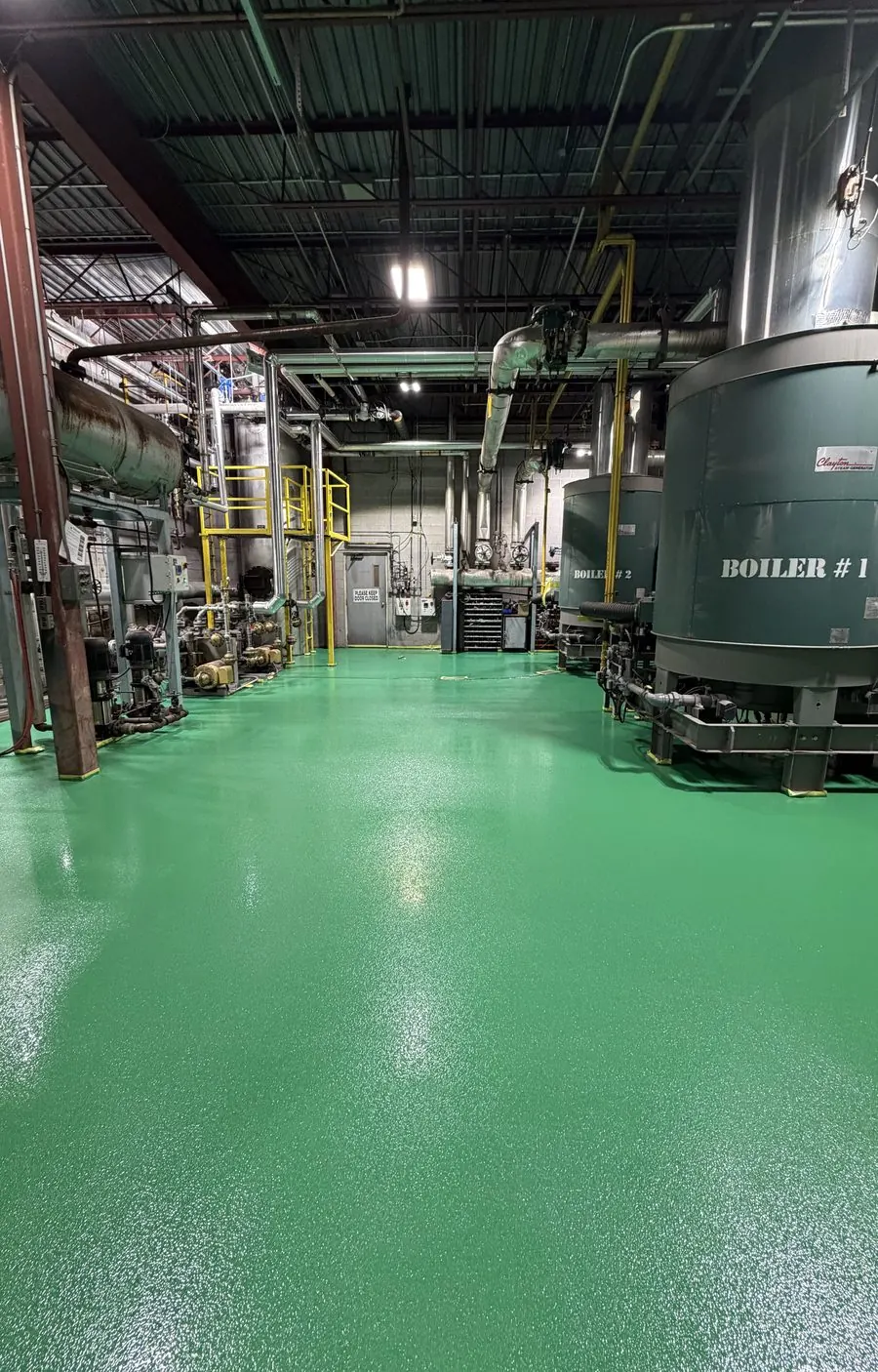
Heavy-duty epoxy floors with safety line marking for manufacturing plants and production facilities, installed during shutdowns and overnight.

Manufacturing and production

Flooring Built for Production Floors

Forklift and Impact Resistance

High-build systems stand up to forklifts, pallet jacks, dropped parts and rolling equipment.

Chemical Resistance

Systems are selected for the oils, coolants, hydraulic fluids and cleaners used in your process.

Safety Line Marking

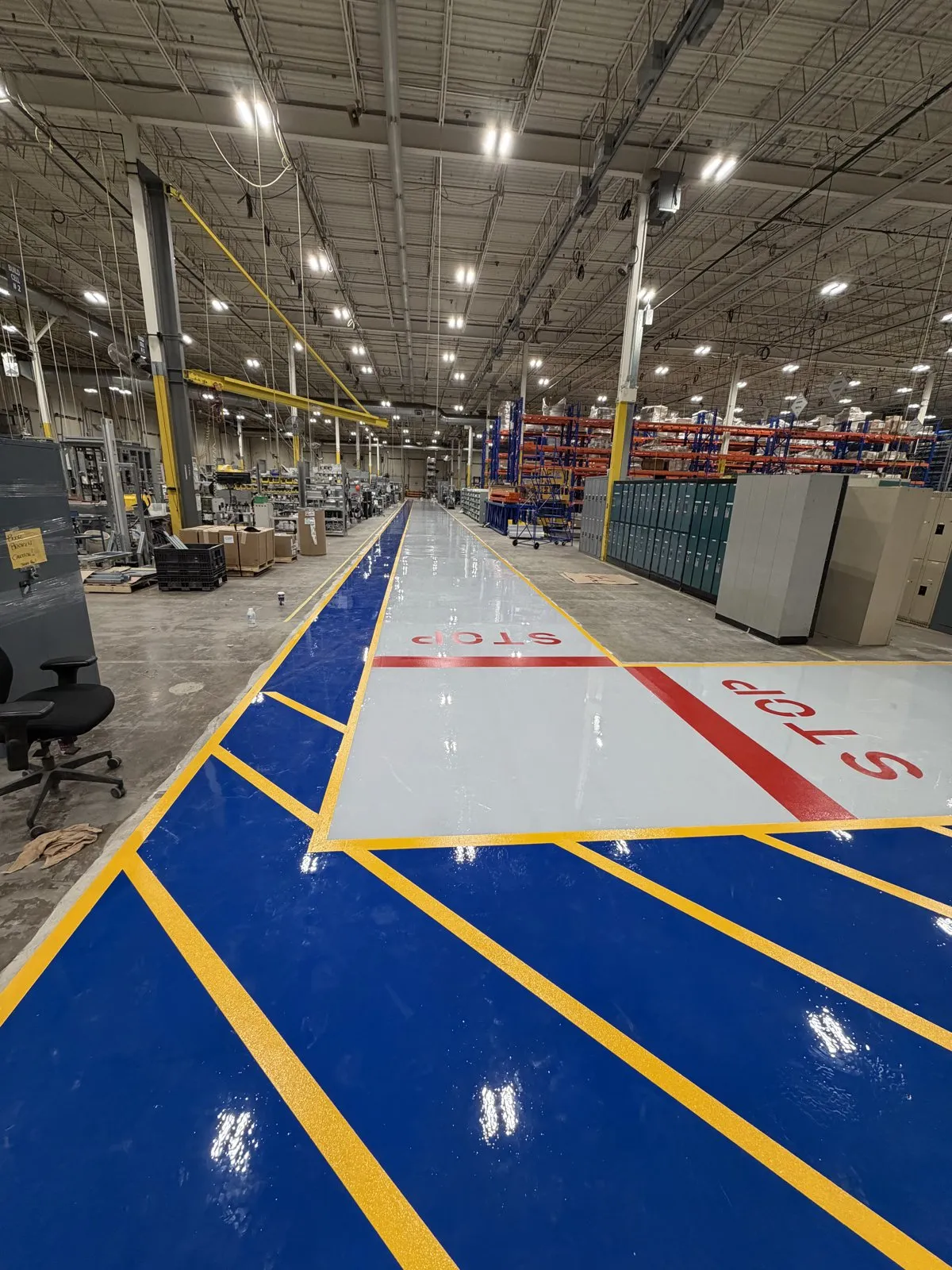
Pedestrian walkways, forklift lanes, stop bars and hazard zones are marked into the floor system.

Dust Control

A sealed floor stops concrete dusting that affects equipment, products and air quality.

Brighter Facilities

Light-coloured coatings reflect light, which improves visibility across the production floor.

Shutdown Scheduling

Work is planned around shifts, weekends and planned holiday shutdowns.

Production Floors Take Constant Abuse

A manufacturing floor carries forklifts, pallet jacks, carts and heavy equipment, and it is exposed to oils, coolants, hydraulic fluids and cleaning chemicals. Bare concrete dusts, stains and breaks down at joints, and faded paint lines make traffic routes hard to follow. A properly specified epoxy system seals the slab, resists the chemicals in your process and gives you a bright, clearly marked floor that is easier to keep clean and safe. Request a free estimate to discuss your facility.

Areas We Coat in Manufacturing Facilities

  • Production floors: high-build epoxy systems for equipment, carts and constant foot traffic
  • Forklift lanes and aisles: durable floors with clearly marked traffic routes
  • Assembly and clean areas: bright, sealed floors that reduce dust; see ESD anti-static epoxy for electronics assembly
  • Maintenance shops and wash bays: chemical-resistant systems for oils, fluids and cleaning
  • Shipping, receiving and docks: high-traffic floors with polyurea joint filling to protect slab joints
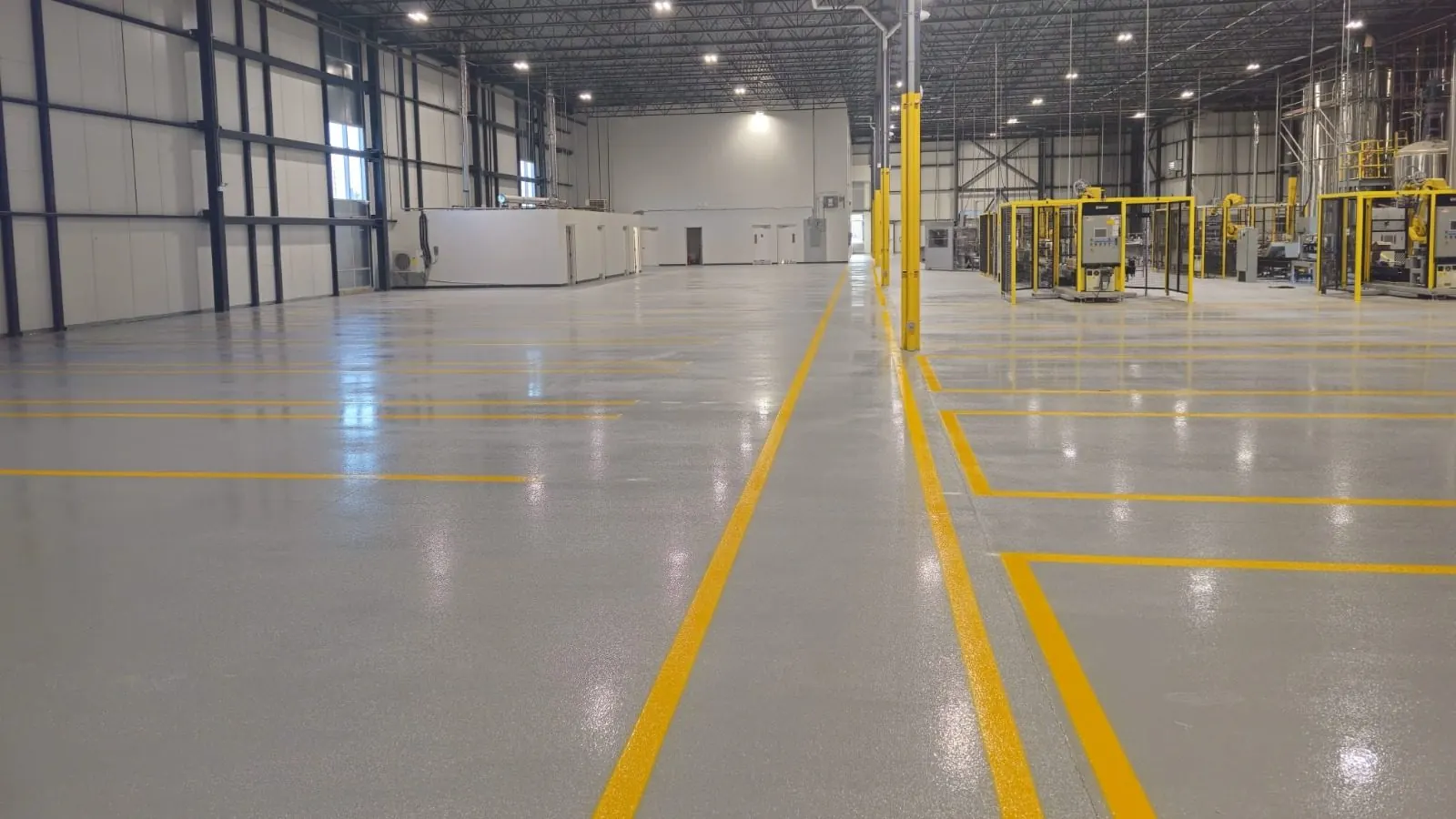
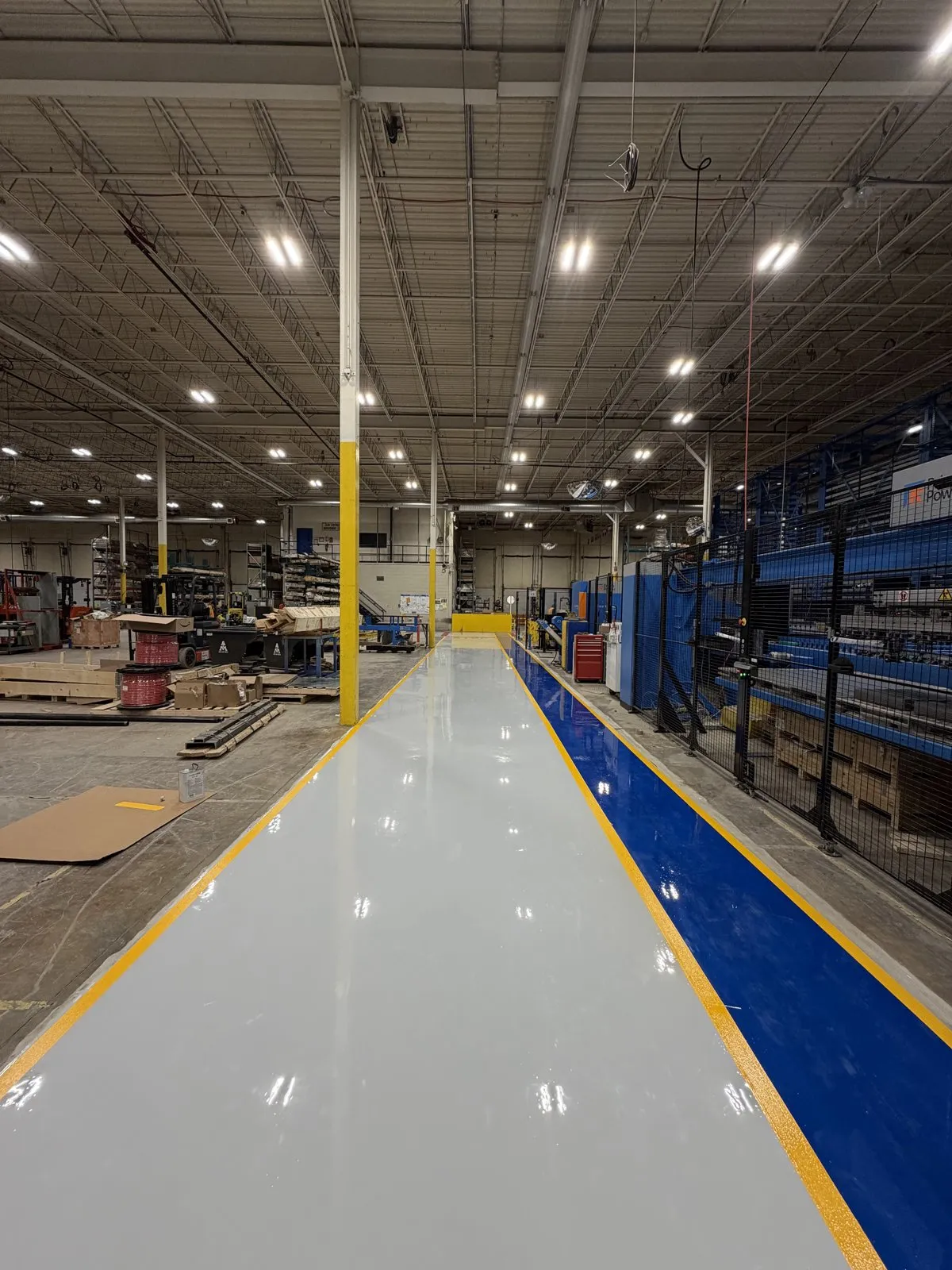
Gloss grey epoxy aisle at the Eaton electrical facility finished by Supreme Epoxy
Recent project

Eaton Electrical Facility

A 3-coat epoxy floor with Safety Blue pedestrian walkways, 4-inch Safety Yellow lines finished in Carboline epoxy, grey forklift areas and red stop bars, installed during a Christmas shutdown in Milton.

Read the Case Study

Safety Line Marking Built into the Floor

Clear floor markings separate people from equipment and show where materials, exits and hazards are. We install pedestrian walkways, forklift lanes, stop bars, hazard zones and stencils as part of the floor system, so the markings are durable instead of painted over bare concrete. Our safety line marking page and our guide to forklift safety floor markings in Ontario explain the options.

Preparation for Industrial Slabs

Industrial slabs often carry oil contamination, old coatings, damaged joints and uneven areas. We prepare them with diamond grinding or shot blasting, repair joints and cracks, and test for moisture before the system is selected. Preparation is the step that decides how long an industrial floor lasts, and it is never shortened to save time.

Plan around production. Tell us your shutdown windows and the areas that must stay running. We phase the work, coordinate with your team and confirm return-to-service times in writing.

Timeline and Pricing Factors

Manufacturing floors are quoted after a free site assessment. The main pricing factors are:

  • The area and how it is divided into work zones
  • The condition of the slab, joints and any existing coatings
  • The system thickness and chemical resistance required
  • The amount and type of safety line marking and stencils
  • The schedule and how much work must be completed during shutdowns or overnight

See our industrial epoxy flooring page and our guide to heavy-duty floor coatings for manufacturing.
How it works

How a Manufacturing Floor Is Installed

Site Visit and Plan

We review the production floor, traffic routes, chemicals and slab condition, then agree the system, phasing and price in writing.

Grinding or Shot Blasting

Old coatings and contamination are removed and the slab is ground or shot blasted with dust control.

Joints and Cracks

Damaged joints, cracks and low spots are repaired so the coating is installed on a sound slab.

System and Markings

The epoxy system is installed in zones, followed by walkways, lanes, stop bars and stencils.

Inspection and Handover

We inspect the floor with you and confirm cure times so equipment and traffic can return.

Our work

Projects We Have Completed

Industrial and commercial floors we have installed across the GTA. Each project page covers the space, the system and the schedule.

View All Case Studies

Client testimonials

What Our Clients Say

★★★★★

"Beautiful job. Impressed with the quality of work, explanation of the process, great communication, and they left the job site very clean."

M
Marc PedneaultGoogle Review
★★★★★

"Very impressed with their quality of work, explanation of the process and their cleanliness. Hamza's communication was amazing. He broke everything down step by step."

M
Megan D.Google Review
★★★★★

"Adam and his crew were very respectful to the owners of our condo building, their property and the surrounding environment. The work was first class and the transformation is amazing."

B
Barbara RobbCondo Building · Google Review
Questions

Manufacturing Plant Epoxy Flooring FAQ

What is the best floor coating for a manufacturing plant?
It depends on the traffic, chemicals and temperature in each area. High-build epoxy suits most production floors, while urethane cement suits areas with thermal shock or aggressive washdown. We recommend the system after a site assessment.
Can safety lines be added to the floor?
Yes. We install pedestrian walkways, forklift lanes, stop bars, hazard zones and stencils as part of the floor system.
Can you work during a plant shutdown?
Yes. We plan work around shifts, weekends and planned holiday shutdowns, and phase areas so parts of the facility can keep running.
How do you prepare an oil-contaminated slab?
Contaminated concrete is cleaned and mechanically prepared by grinding or shot blasting. Heavily contaminated areas are assessed during the site visit and addressed in the scope.
What happens to the joints in the slab?
Damaged joints are repaired before coating, and polyurea joint filling can be used to protect joint edges in forklift traffic areas.
Do you offer free estimates?
Yes. We visit the facility, review each area and provide a written scope, schedule and quote.
Service areas

Manufacturing Floors Across the GTA

Supreme Epoxy completes projects across Toronto and the Greater Toronto Area.

Request a Site Assessment

Book a free site visit and get a written scope, schedule and quote that fits your production schedule.

Get My Free Quote