
What Is ESD Flooring?
Electrostatic discharge (ESD) occurs when static charge builds up and releases suddenly. A discharge too small to be felt can damage sensitive electronic components, corrupt data or ignite flammable materials. ESD flooring controls this risk by allowing static charge to flow safely to ground, and is installed as part of a broader static-control program that includes footwear, work surfaces and grounding. Request a free estimate to discuss your facility.
Static-Dissipative and Conductive Systems
- Static-dissipative: allows charge to bleed off in a controlled way and is widely used in electronics assembly, labs and data centres
- Conductive: carries charge to ground more quickly and is used where very rapid dissipation or hazardous materials are involved

Where ESD Floors Are Used
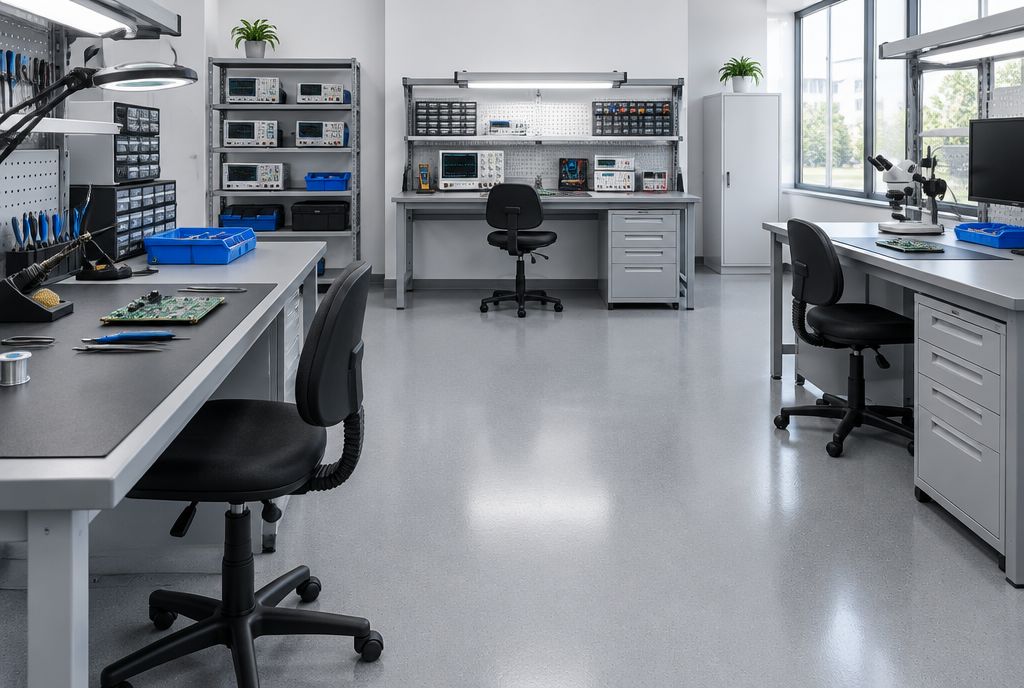
- Electronics assembly and test areas
- Data centres and server rooms
- Laboratories and cleanroom-adjacent spaces
- Telecommunications and control rooms
- Manufacturing areas handling static-sensitive parts
How an ESD Floor Is Built
Prepared Concrete and Primer
The slab is ground, repaired and primed so the system bonds.
Grounding Network
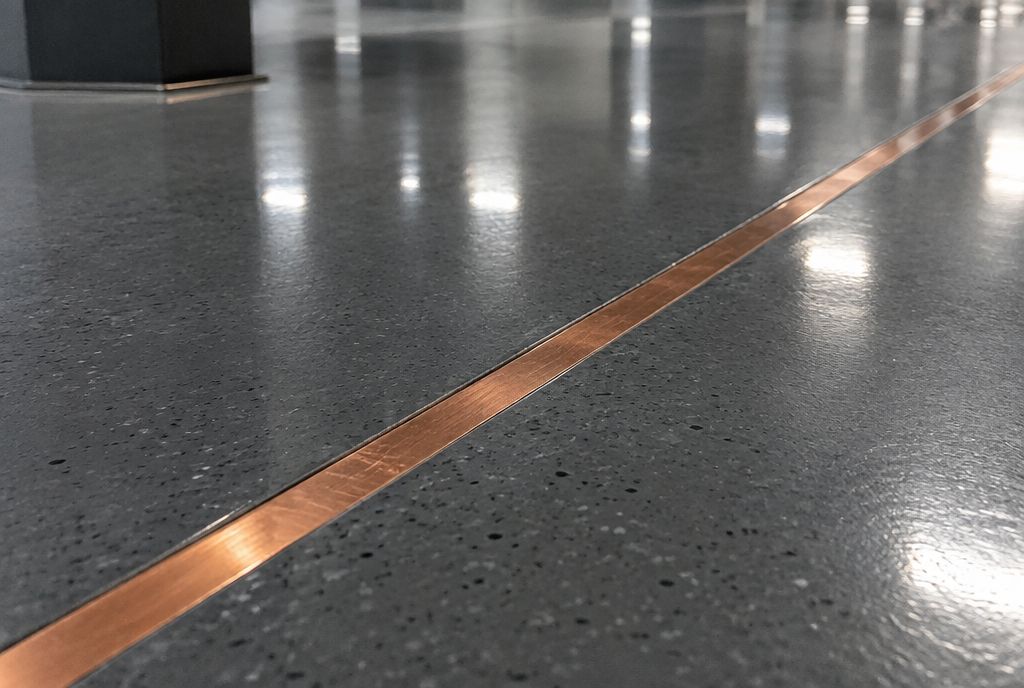
Copper grounding strips are laid and connected to the building ground according to the design.
Conductive Primer
A conductive layer links the grounding network to the floor surface.
ESD Topcoat
The static-dissipative or conductive topcoat is applied to give a smooth, durable, cleanable finish.
Tell us your target. ESD programs specify resistance ranges. Share your requirement or standard and we will specify and test the floor to meet it.
Testing and Documentation
A static-control floor is only useful if it performs, so it is tested after installation with a calibrated resistance meter. We record readings across the area and provide documentation for your quality or compliance records. If readings fall outside the required range, we investigate and correct the issue. Regular testing over the life of the floor is also recommended, and we can advise on schedules.
Timeline and Pricing Factors
ESD flooring is a specialized system, so we quote in writing after a free site assessment. The main factors are:
- The floor area and the grounding layout
- Static-dissipative or conductive specification
- Existing floor and slab condition
- Testing and documentation requirements
- Access, cleanliness requirements and schedule
See our epoxy flooring cost guide and industrial epoxy flooring for context.