What Is a Polyaspartic Coating?
Polyaspartic is a type of aliphatic polyurea coating, known for its fast cure, UV resistance and hard, glossy film. In flooring it is commonly used as a clear or pigmented topcoat over an epoxy base, combining the strength of epoxy with the speed and UV stability of polyaspartic. It is also used as a standalone system for fast-turnaround projects and exterior slabs. Request a free estimate to discuss your project.
Polyaspartic vs Epoxy
Both are excellent floor coatings, and many of our floors use both. The difference is in how they behave:
- Epoxy builds thickness and strength at a good cost, which makes it a strong base coat. Standard epoxy can yellow in UV light, which is why it is usually topcoated.
- Polyaspartic cures fast, stays clear in sunlight and resists abrasion, which makes it ideal as a topcoat or for short-downtime installs.
Where We Use Polyaspartic
- Garage floors: a clear topcoat over flake that stands up to hot tires, salt and UV through the door
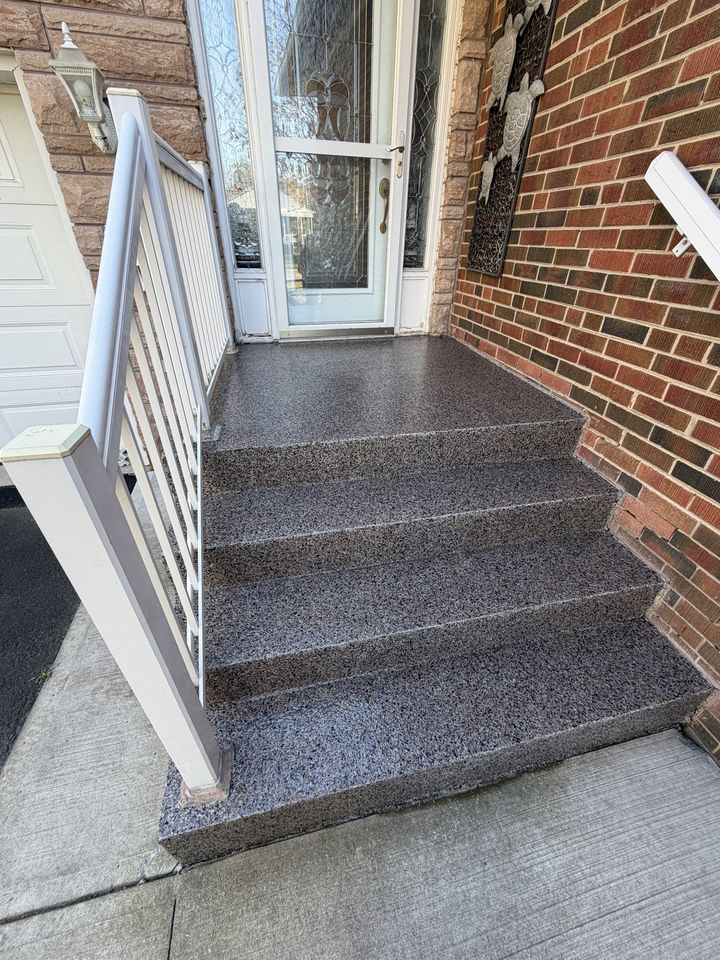
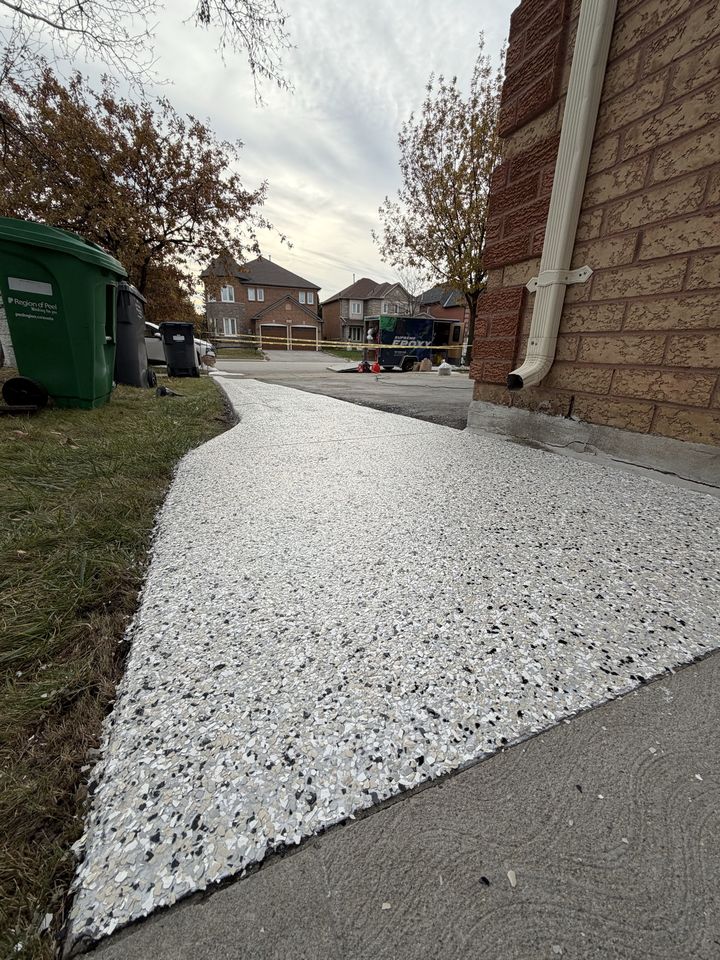
- Patios, pool decks and exterior concrete where UV stability matters
- Commercial and retail floors that cannot be closed for long
- Warehouse and industrial aisles that need abrasion resistance and quick return to service
How a Polyaspartic System Is Built
Prepared Concrete
Diamond grinding opens the surface and cracks and pits are repaired. Preparation matters as much with polyaspartic as with any coating.
Primer or Epoxy Base
A primer or epoxy base coat gives strength and a thick build. Flake can be broadcast into it for colour and texture.
Polyaspartic Topcoat
The clear or pigmented polyaspartic coat is applied in a short working window, then cures quickly to a hard, glossy film.
Skilled application matters. Polyaspartic sets quickly, so application is time-sensitive. Our crew plans the pour sequence and works in controlled sections for an even, clean finish.
Timeline and Pricing Factors
Because it cures quickly, polyaspartic systems often shorten the total install time and the wait before you can use the floor again. We confirm exact times for your project at the site visit and give a written quote. The main factors are:
- The area and condition of the concrete
- Whether polyaspartic is used as a topcoat only or as the full system
- Flake or colour options underneath
- Indoor or outdoor conditions and access
See our epoxy flooring cost guide and garage epoxy floors for typical applications.
Caring for a Polyaspartic Floor
Sweep or dust mop regularly, clean with a pH-neutral cleaner and soft mop, and rinse away road salt in winter. Wipe up spills when you see them and avoid harsh solvents. The finish is easy to maintain, and we explain care at handover.