Fast Turnaround for Commercial Floors
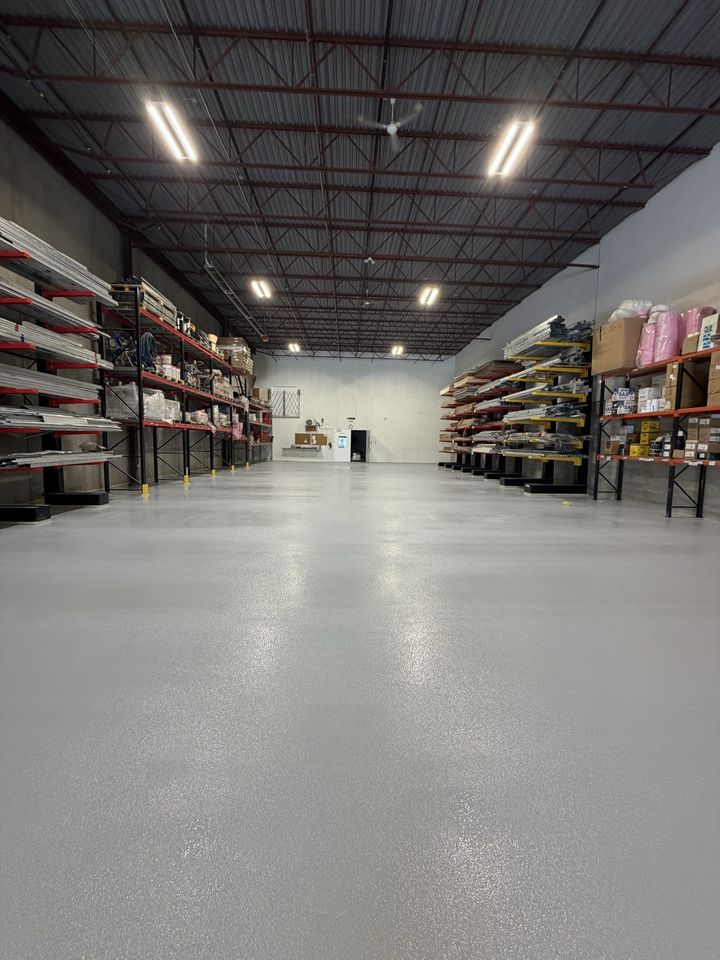
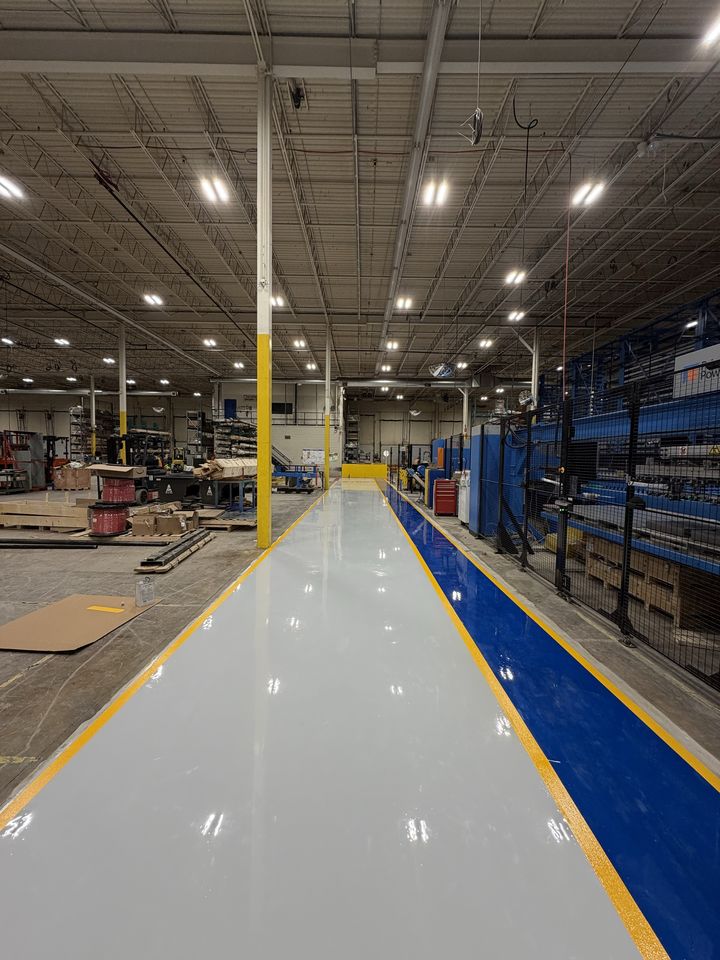
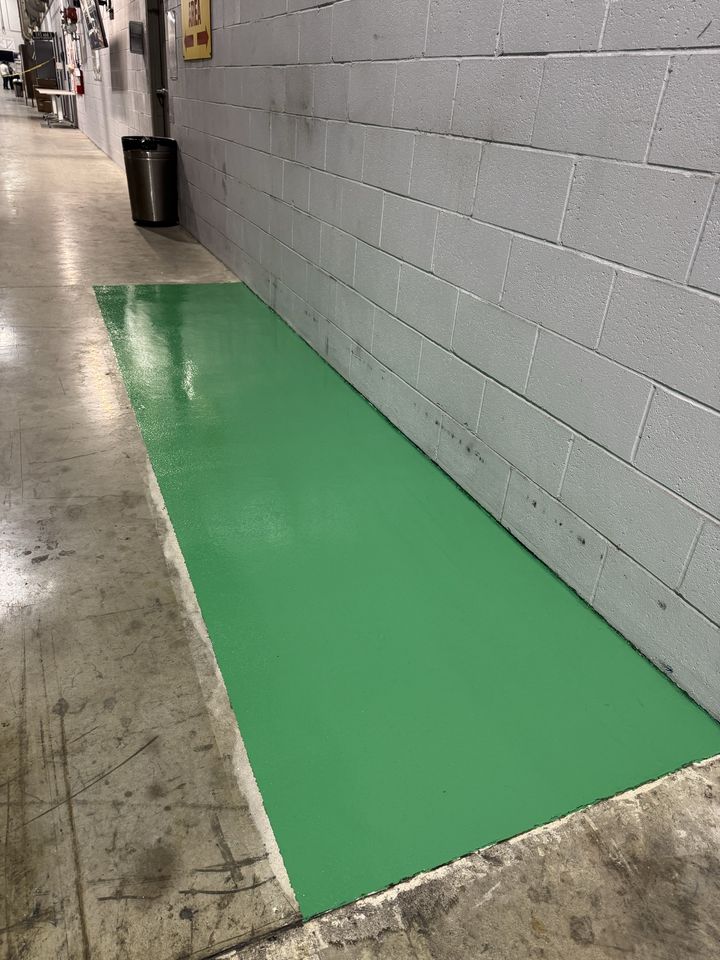
Polyaspartic flooring is a practical choice for commercial facilities and warehouses with tight installation schedules and limited shutdown windows. Its rapid-curing properties allow shorter intervals between coats and a faster return to service than conventional epoxy systems, helping minimize disruption to daily operations. Suitable applications include full-floor coatings, designated pedestrian walkways, safety markings and clearly defined work zones. With durable protection against abrasion and daily wear, polyaspartic systems combine efficient installation with the performance required in demanding commercial environments. Supreme Epoxy assesses each facility’s concrete conditions, traffic demands and available shutdown window to specify the appropriate system and confirm return-to-service requirements. Request a free estimate to discuss your project.
Why Cure Time Matters in a Commercial Space
For a homeowner, an extra day of cure time is an inconvenience. For a business, it can mean lost orders, idle staff and missed deliveries. Standard epoxy systems need longer between coats and before traffic, which can stretch a project beyond the time a facility can afford to close. Polyaspartic coatings cure much faster, so coats can be applied closer together and the floor reaches a usable state sooner. That makes it easier to fit the work into a weekend, an overnight window or a planned shutdown. See the full overview on our polyaspartic floor coating page.
Where Commercial Polyaspartic Flooring Works Well
- Warehouses and distribution facilities with limited downtime
- Retail stores and showrooms that must reopen on schedule
- Light manufacturing, assembly and workshop floors
- Parking structures, ramps and loading docks
- Automotive dealerships, service bays and maintenance facilities
- Entrances and areas exposed to sunlight, where UV stability matters
Planning Around Your Shutdown Window
The most effective way to use a fast-curing system is to plan the schedule carefully. We start with the time you actually have: a long weekend, a few overnight shifts or a planned shutdown. From there we work back to a plan that covers preparation, repairs, coats and cure times, and we confirm in writing when each section can return to service. Large floors can be phased in sections so receiving, shipping or sales can continue in unaffected areas.
Tell us your window. Share the time you can close, the traffic the floor carries and any delivery or opening dates. We will tell you honestly what can be achieved in that time and what cannot.
How a Commercial Polyaspartic System Is Built
Concrete Assessment and Preparation
We check the slab for moisture, cracks and contamination, then diamond grind or shot blast to open the surface for bonding.
Repairs and Priming
Cracks, joints and damaged areas are repaired for the traffic they will carry, and a suitable primer is applied.
Base Coat or Build Coat
Where the floor needs added thickness or texture, an epoxy or polyaspartic base builds the system.
Polyaspartic Topcoat
The rapid-curing topcoat gives abrasion resistance, UV stability and a clean, glossy finish, with safety markings and zones applied to the plan.
Safety Markings, Walkways and Work Zones
A coated floor is also a safety and workflow tool. We can paint pedestrian walkways, forklift lanes, loading zones and equipment areas directly into the polyaspartic system, so the markings are protected under the same durable film as the floor. Clear, lasting markings help keep people and equipment apart and make a facility easier to navigate.
When Polyaspartic Is Not the Right Choice
Polyaspartic is excellent when schedule and abrasion resistance matter, but it is not right for every slab. It sets quickly, so application needs trained crews working in controlled sections. Slabs with high moisture, heavy contamination or damage need attention first, and some aggressive chemical or thermal conditions call for a different system, such as urethane cement. We recommend what suits your facility, even when that is not polyaspartic.
Timeline and Pricing Factors
We quote commercial polyaspartic projects in writing after a free site assessment. The main factors are:
- The total area and how the work can be phased
- Concrete condition, repairs and moisture
- The system and thickness required for your traffic
- Safety markings, walkways and zone layouts
- The length of your shutdown window and any overnight or weekend work
See our epoxy flooring cost guide for how pricing works, or explore commercial epoxy flooring for standard systems.