Why a Warehouse Needs a Coated Floor
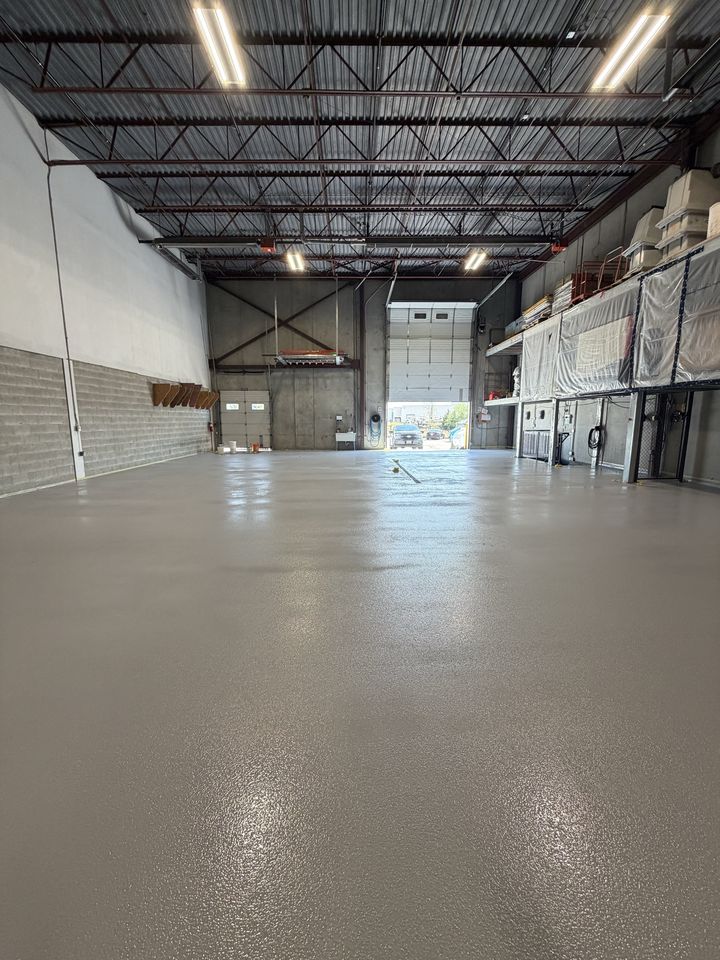
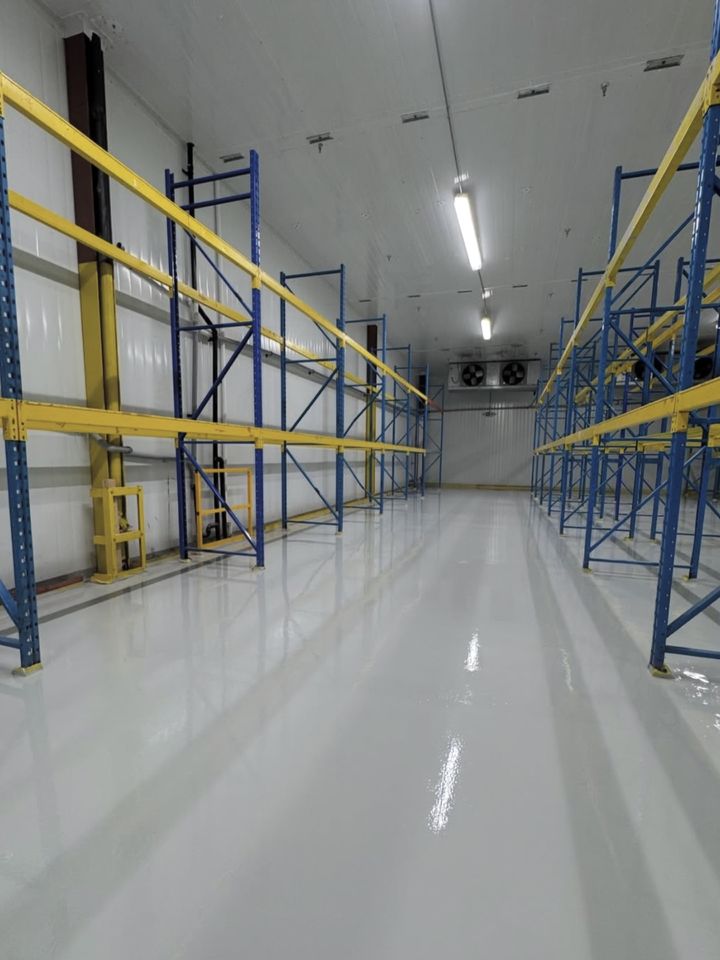
A warehouse slab supports racking, forklifts, pallet jacks and thousands of wheel passes each day. Uncoated concrete is porous and weak at the surface, so it dusts, spalls at the joints and absorbs oil and spills. Dust settles on inventory and equipment, and damaged joints slow forklift traffic and accelerate wheel wear. A properly installed epoxy or polyurethane system seals and strengthens the surface, resulting in a safer, cleaner and more efficient facility. Request a free estimate to discuss your warehouse.
What We Install in Warehouses and Distribution Centres
- Heavy-duty epoxy systems for general warehouse and picking aisles
- Polyurethane and polyaspartic topcoats for abrasion resistance and fast return to service
- Joint filling and spall repair so forklift wheels run smoothly
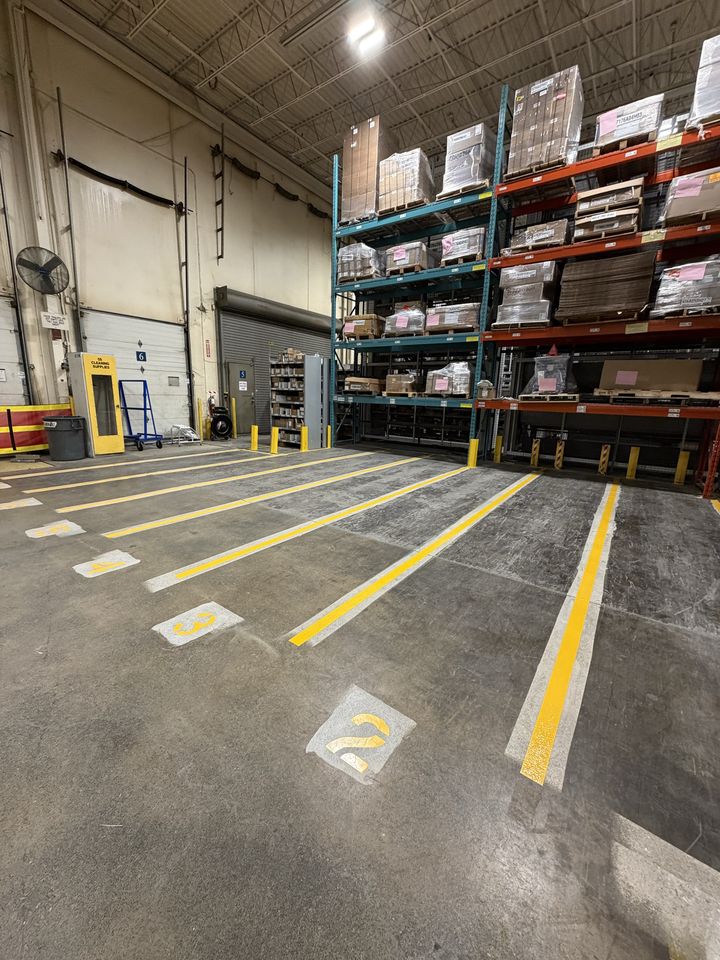
- Painted aisles, pedestrian walkways, loading bay and staging zones
- Cove base and detailing where floors meet walls and equipment
Prep and Repair Come First
The slab is the foundation of the whole system. We diamond grind or shot blast to open the surface and remove contamination, repair cracks and spalls, and fill saw-cut and control joints with a filler rated for forklift traffic. Skipped repairs are the most common reason warehouse coatings fail: a coating cannot be stronger than the concrete under it. For bigger damage, see our concrete repair service.
Completed in about three days. Many warehouses are finished in as little as three days, and work can be phased or completed overnight so operations continue.
Safety Markings and Layout
A coated floor also supports layout and workflow. Travel lanes, pedestrian walkways, racking footprints, loading zones and hazard areas are painted into the system. Because the markings are part of the coating rather than tape or paint on bare concrete, they stay crisp and last as long as the floor.
Choosing the Right System
Epoxy Base with Topcoat
The standard specification for most warehouse floors: durable, seamless and cost-effective.
Polyurethane or Polyaspartic Topcoat
Better abrasion resistance and UV stability for high-traffic aisles and areas near the dock doors. See polyaspartic coatings.
Urethane Cement
For cold, wet or washdown areas that need to handle thermal shock and moisture. See urethane cement floors.
Timeline and Pricing Factors
Warehouse projects are quoted in writing after a free site assessment. The main pricing factors are:
- Total square footage and how the work can be phased
- Concrete condition, cracks and joints to repair
- Traffic type and wheel loads
- The system, thickness and markings specified
- Access, scheduling and whether racking can be moved
For ballpark guidance see our epoxy flooring cost guide. For plants and process facilities, see industrial epoxy flooring.