
Polyurea Joint Filling in Toronto and the GTA
Concrete floors are cut with joints so they can shrink and crack in controlled lines instead of at random. Those saw-cut control joints are also the weak point of a busy warehouse or plant floor. Hard forklift and pallet jack wheels hit the empty joint again and again, chip the edges and break off pieces of concrete. The damage, called spalling, makes the floor rough, slows equipment and creates trip hazards. Filling the joints with a semi-rigid polyurea filler supports the edges, keeps debris out and extends the life of the slab. Supreme Epoxy fills control joints in warehouses, distribution centres and industrial buildings across Toronto and the GTA. Request a free estimate to discuss your project.
Why you can rely on this guidance. Supreme Epoxy is a commercial, industrial and residential flooring contractor established in 2019, WSIB and business insured, with a 4.9 out of 5 rating from 117 Google reviews. We install warehouse floors and the markings on them: warehouses have been completed in as little as three days, and overnight installs are available for operations that cannot stop. This page explains how markings are specified, applied and maintained. It is general information, not legal advice, so always confirm requirements with your health and safety lead, your joint health and safety committee and the regulations that apply to your site.
What Is Polyurea Joint Filling?
Polyurea joint filler is a fast-curing, two-component material that is dispensed into a cleaned saw-cut joint. Semi-rigid formulations cure firm enough to support the joint edges under wheeled loads, yet retain some flexibility so they can accommodate the small movements that occur in a slab. After curing, the surface is trimmed flush with the floor so wheels roll across it smoothly. The goal is edge support and protection, not to stop the concrete from moving.
Control Joints, Isolation Joints and Cracks: What Gets Filled and How
Saw-Cut Control Joints
The common target for semi-rigid polyurea joint filler. These are cut in a grid to control shrinkage cracking and are the joints forklifts hit most often.
Isolation and Expansion Joints
These are designed to let slabs move relative to columns, walls and other slabs. They normally need a flexible sealant that accommodates movement, not a semi-rigid filler, and we will tell you if a joint needs a different material.
Cracks
Random cracks can often be routed and filled with a suitable repair material. See our concrete repair service.
Construction Joints
Where one pour meets another, joint treatment depends on whether load transfer and movement are expected. We assess these case by case.
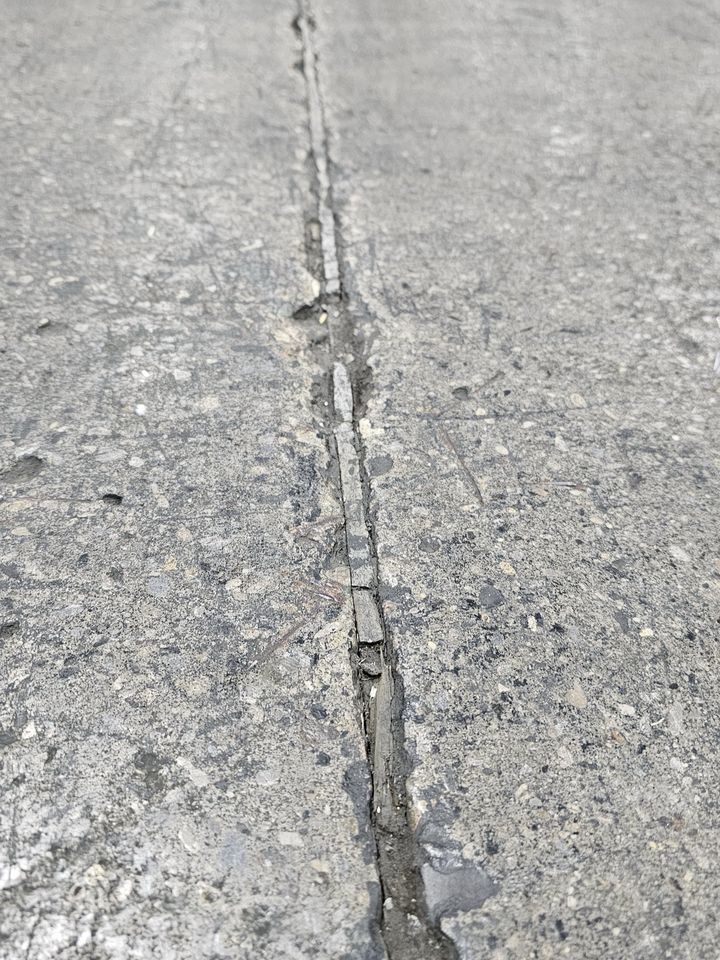
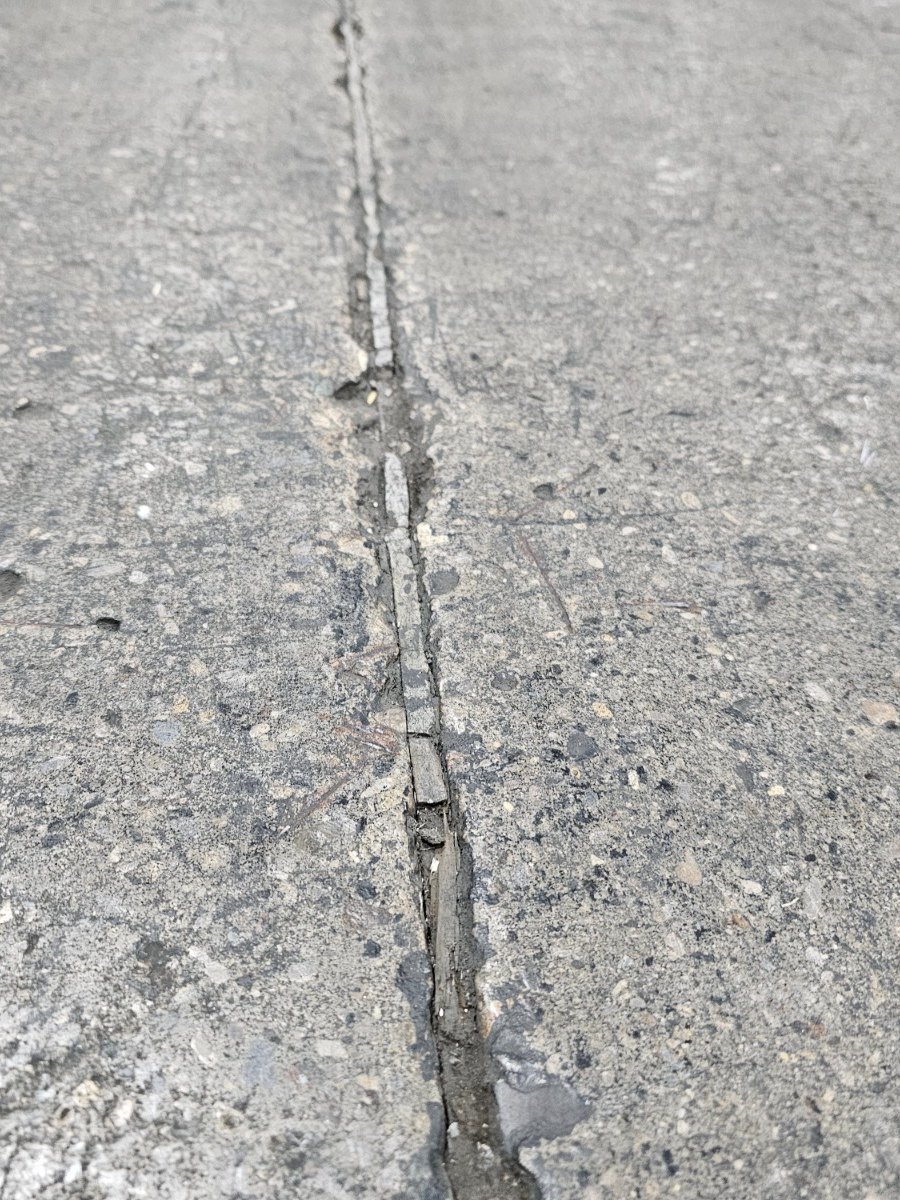
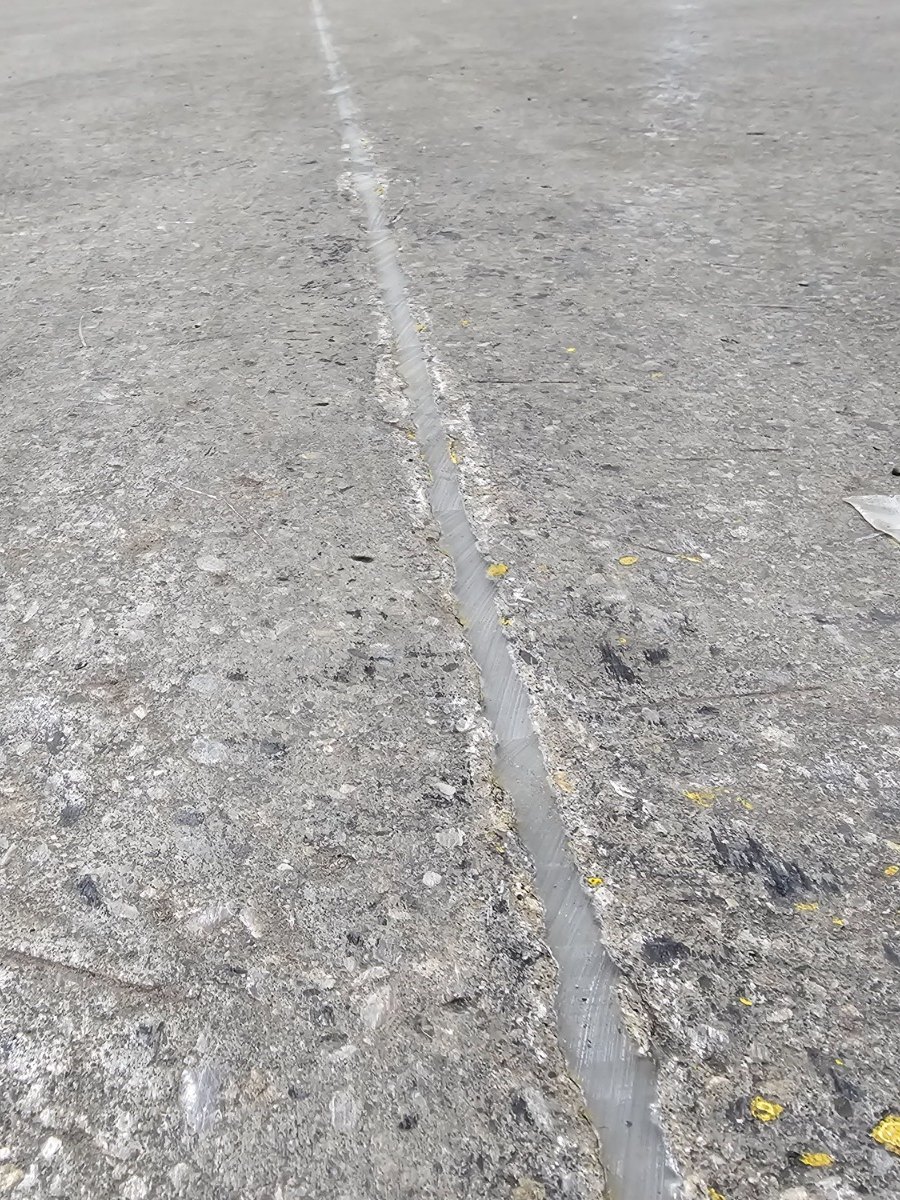
When to Fill the Joints
Concrete shrinks as it cures and dries, and control joints open slightly as that happens. Industry guides such as ACI 302.1R discuss this shrinkage and why joints are cut. Filling too early can mean the joint continues to open and the filler loses contact with the edges, while waiting too long exposes the joint edges to damage. Many projects wait until most of the early shrinkage has taken place, which for a new slab is often weeks to a few months after placement, and the right timing depends on your slab, your schedule and the filler manufacturer. We assess your floor and recommend a timing plan. Existing floors can be filled at any time, provided the joints are sound enough to hold filler.
How We Fill Joints
- Inspect the joints. We check width, depth, edge condition and any old filler or sealant.
- Clean the joint thoroughly. Old filler, dirt and loose concrete are removed, and the joint is vacuumed so the filler can bond to clean, dry edges.
- Repair damaged edges. Chipped or spalled edges are repaired so the filler has sound concrete to grip.
- Prime if needed. A primer is used where the concrete or filler manufacturer calls for it.
- Dispense the polyurea. The filler is placed to fill the joint completely, usually slightly proud of the surface.
- Cure and trim. After the filler cures, it is shaved or ground flush with the floor.
- Hand over. We confirm return-to-service times and walk the floor with you.
Minimal downtime. Polyurea cures quickly, so joint filling can often be done in phases, overnight or on weekends while the rest of the facility keeps working.
Joint Filling with Coatings and Floor Markings
Joint filling pairs naturally with other floor work. Filling joints before applying a coating means the coating sits on a continuous, supported surface. It is also a good time to apply safety lines and markings, since the floor is already prepared. See warehouse safety line marking, warehouse epoxy flooring and commercial polyaspartic flooring.
Joint Filling and Workplace Safety
Spalled joints create trip hazards and rough travel for equipment. OSHA 1910.176(a) calls for aisles and passageways to be kept clear and in good repair, and Ontario employers have duties under the Occupational Health and Safety Act and O. Reg. 851 to maintain a safe workplace. Keeping joints filled and edges intact is part of keeping floors in good repair. Your health and safety lead decides what your site requires.
Timeline and Pricing Factors
We quote joint filling in writing after a free site assessment. The main factors are:
- The total length of joints to be filled
- Joint width and depth, and the condition of the edges
- Whether old filler or sealant has to be removed
- Edge repair needed before filling
- Scheduling, including overnight and weekend work
For general pricing guidance see our epoxy flooring cost guide.
Standards and Sources
We refer to these public sources when we plan joint work. Check the current version of each before relying on it.
- American Concrete Institute, ACI 302.1R (Guide to Concrete Floor and Slab Construction) and ACI 360R (Guide to Design of Slabs-on-Ground): industry guides on joints, shrinkage and slab performance
- OSHA 29 CFR 1910.176(a), Handling materials: aisles and passageways must be kept clear and in good repair, with safe clearances for mechanical handling equipment
- Occupational Health and Safety Act (Ontario) and O. Reg. 851, Industrial Establishments: employer duties for safe workplaces
- Joint filler manufacturer technical data sheets: the final word on product use, cure times and joint movement limits
Product performance and slab behaviour vary, so always follow the filler manufacturer’s instructions and the guidance of your slab designer or engineer where joints are structural.