
What Is Concrete Polishing?
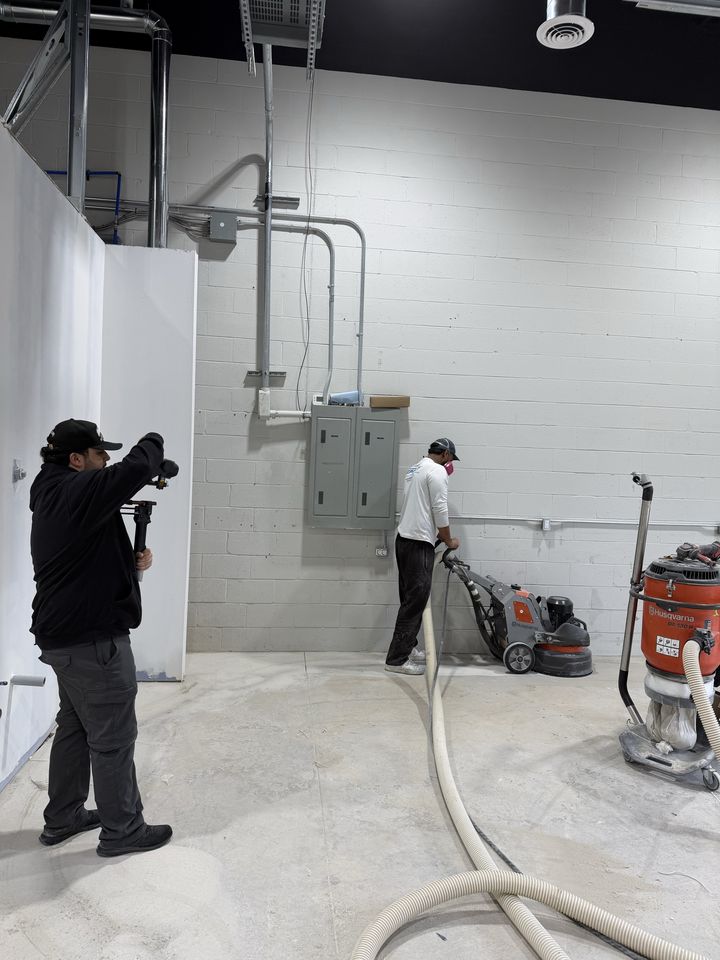
Concrete polishing is a mechanical process. Diamond grinders work across the slab in stages, beginning with coarse tooling that removes coatings and levels the surface, then progressing through finer grits until the concrete reaches the specified sheen. A chemical densifier hardens the surface, and a protective sealer improves stain resistance. The result is a durable, low-maintenance floor made from the existing concrete. Request a free estimate to discuss your project.
Grinding, Honing and Polishing
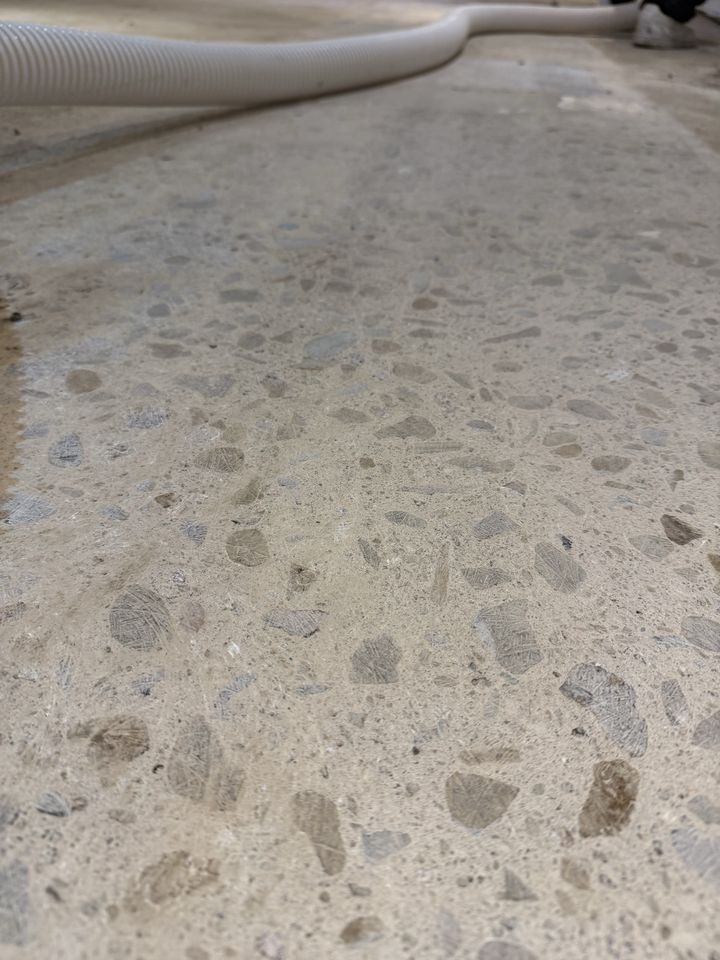
- Grinding removes old coatings, adhesive, stains and high spots and exposes the aggregate if you want that look
- Honing refines the surface with mid-range tooling for a smooth, satin finish
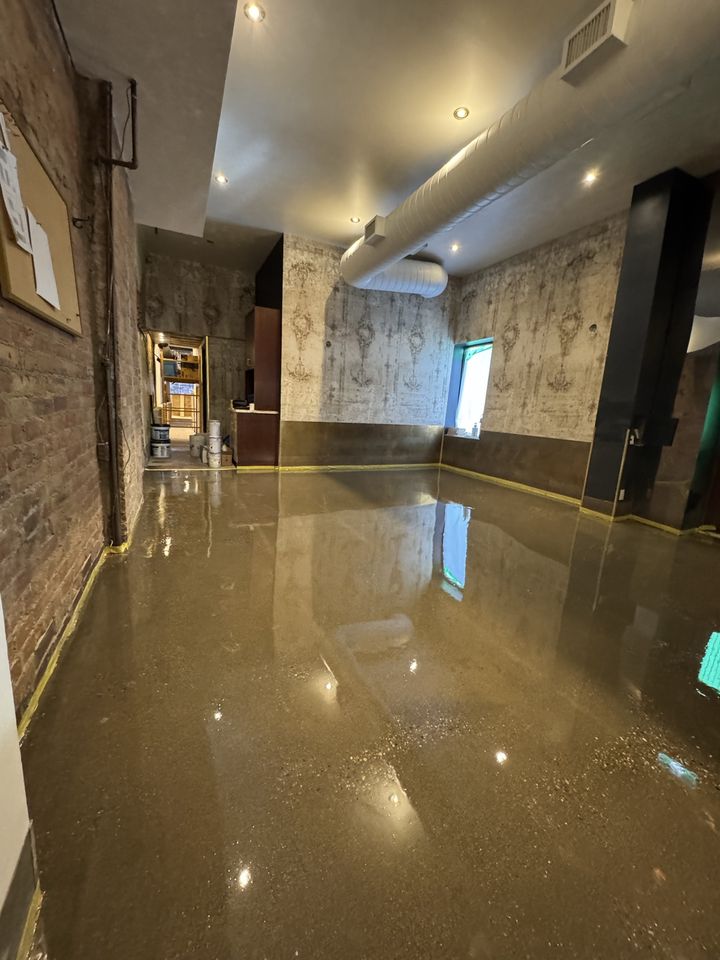
- Polishing uses fine tooling for a deep, reflective finish
- Densifying and sealing hardens the surface and adds stain resistance
Where Polished Concrete Works Well
Polished concrete suits spaces with good-quality slabs and traffic that is mostly foot and light equipment: retail stores, showrooms, restaurants, offices, warehouses with lighter use, and modern homes and basements. It is popular where an industrial, natural look is the goal. In heavy industrial or chemical environments, or where the slab is badly damaged, an epoxy or urethane system is usually the better choice, and we will say so.
Concrete Grinding as Preparation
Grinding is also the preparation step for almost every coating we install. Every epoxy, polyaspartic and metallic floor starts with diamond grinding so the coating can bond properly. If you are not sure whether you want a polished floor or a coated floor, we can explain the differences at your site visit. See our garage epoxy floors and metallic epoxy for the coated alternatives.
Slab condition decides the result. Polished concrete shows the character of the slab: cracks, patches and colour variation stay visible. We inspect the concrete at the site visit so you know what the finished floor will look like.
Timeline and Pricing Factors
Polishing involves several passes with different tooling, so the process takes longer than a single coat of sealer. We give a written quote after a free site visit. The main factors are:
- The area and how much of the surface is covered by coatings or glue that must be removed
- The condition of the slab, including cracks, pitting and patches
- The sheen level you want: matte, satin or high gloss
- Whether you want exposed aggregate and the depth of grinding needed
- Edge work, access and the number of rooms
See our epoxy flooring cost guide for how polished concrete compares with coated systems.
Caring for Polished Concrete
Dust mop regularly, damp mop with a pH-neutral cleaner and wipe up spills promptly. Avoid acidic or harsh cleaners, and use mats at entrances to keep grit off the surface. Some floors benefit from periodic re-sealing, and we explain what to expect for your space at handover.