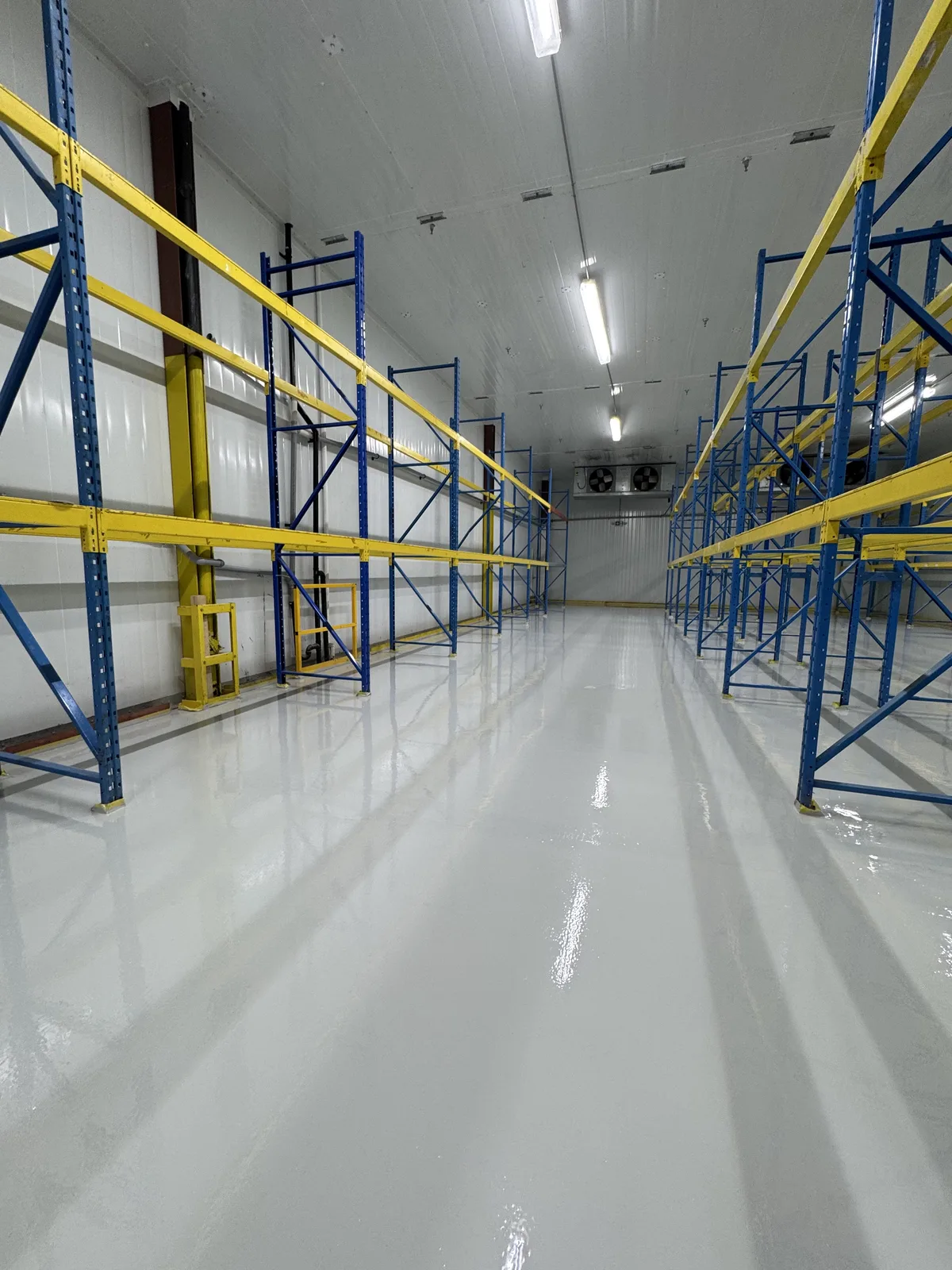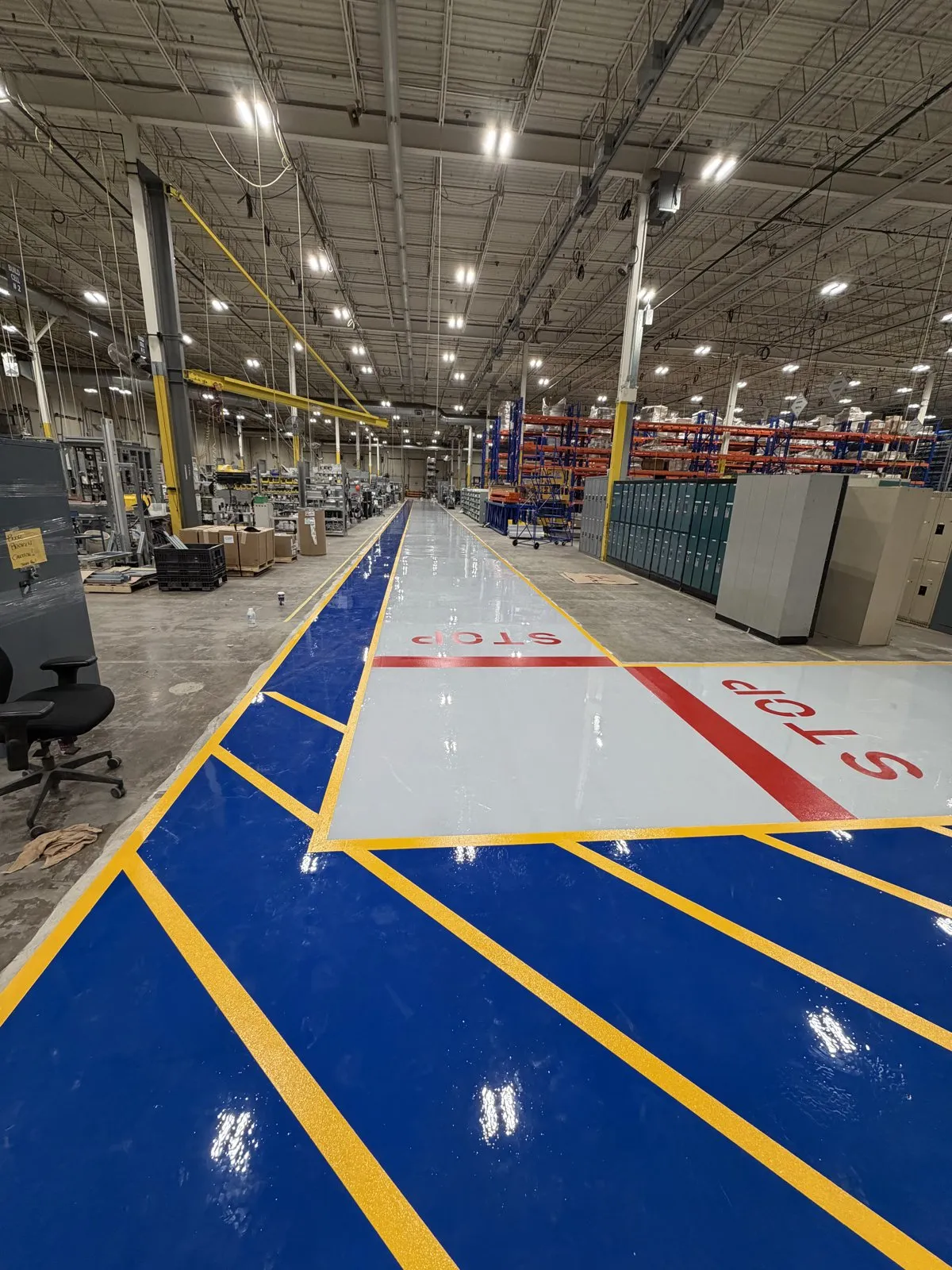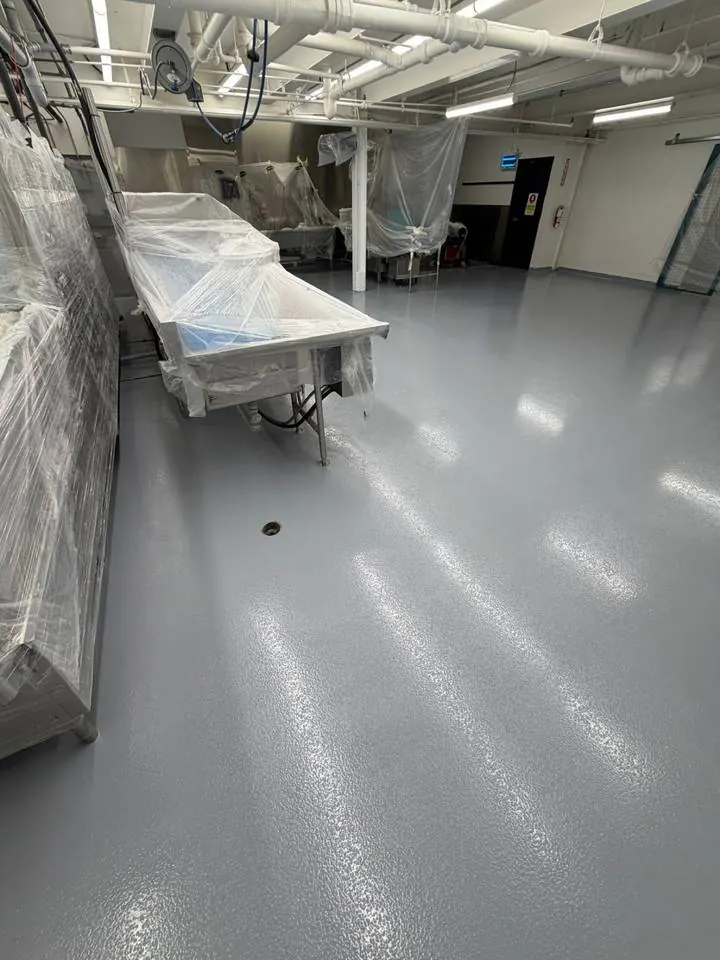
Floors For Freezers, Coolers And Cold Rooms
Cold storage floors take forklift traffic, door threshold wear, condensation and frequent cleaning. Bare concrete collects dust and is difficult to keep clean, which matters when the room holds food or other sensitive products. A coated floor gives the room a sealed, seamless surface that is faster to clean and easier to maintain.
Where We Install
- Freezers and walk-in freezers
- Coolers and cold storage rooms
- Food distribution and storage warehouses
- Loading docks and freezer thresholds
- Food processing plants and production areas
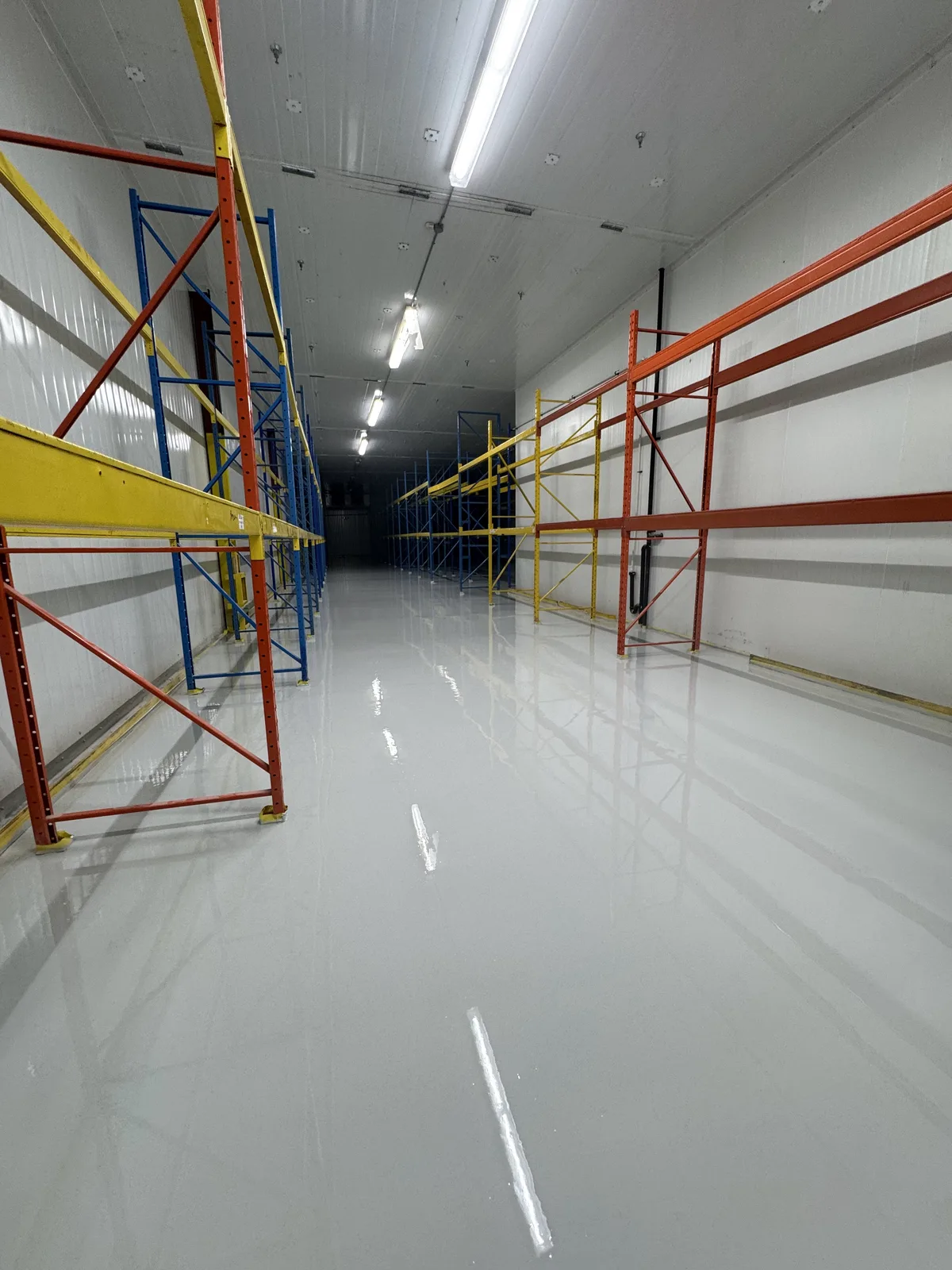
Featured Project: Green World Food Express, Mississauga
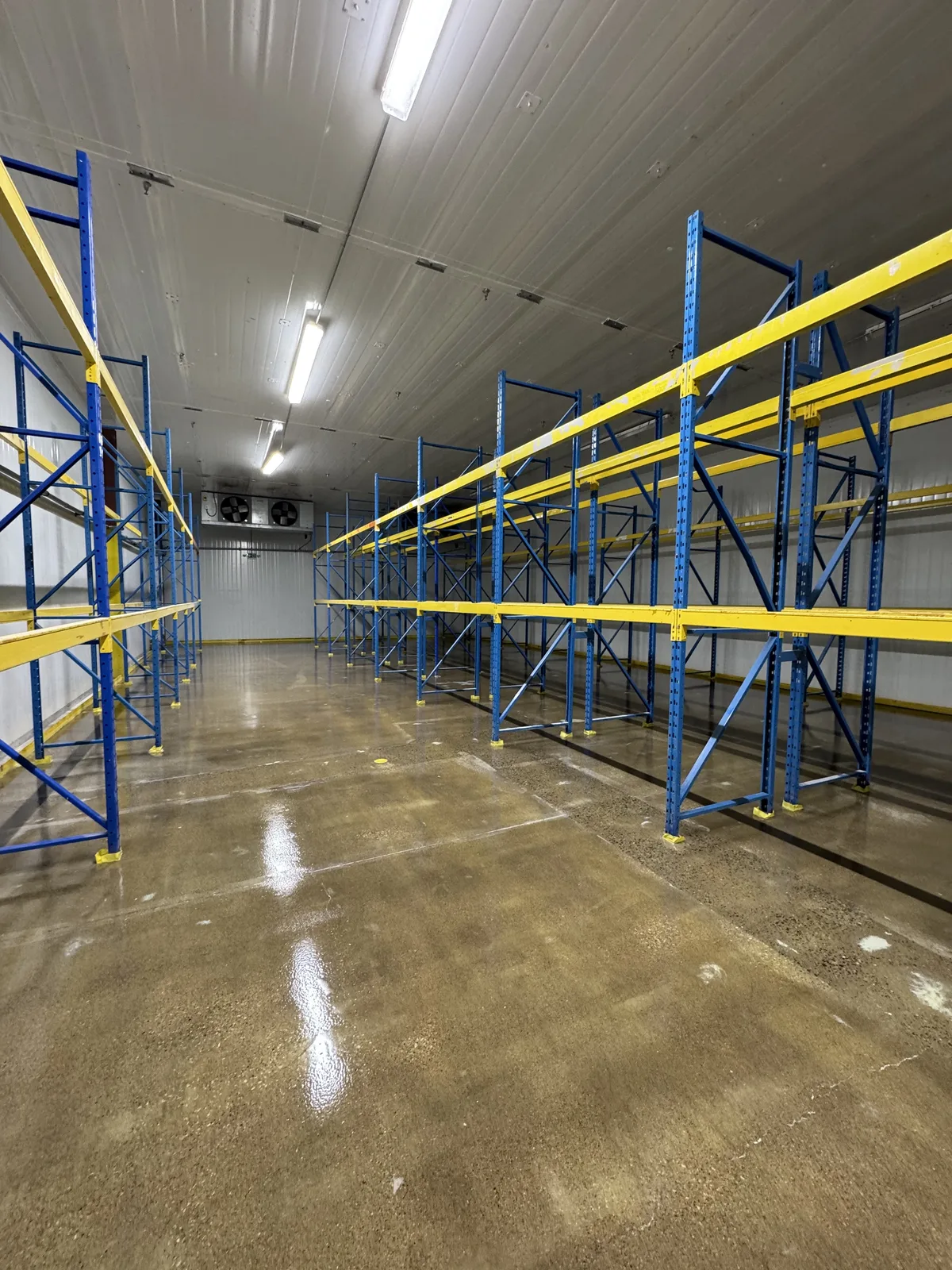
Green World Food Express needed a cleaner, easier-to-maintain floor for its freezer and cold storage room, where forklifts bring dust and debris in and out throughout the day. The refrigeration was switched off for the installation, but the walls and the slab stayed cold. Our crew prepared the concrete, repaired the cracks and installed a 3-coat polyurethane waterproofing system over one weekend. Read the full case study.
Choosing The Right System
The right system depends on the room temperature, how long the refrigeration can be off, the forklift traffic, the cleaning routine and the condition of the slab. We review each of these during a site assessment, then recommend the system and confirm the schedule and return-to-service timing in writing. Cove base can be added along the walls for a sealed floor-to-wall transition. See our epoxy cove base and polyurea joint filling pages.
Planning a cold storage shutdown? Weekend and holiday windows book early. Request a free estimate and we will assess the room and the timeline before you schedule the shutdown.
Pricing Factors
Cold storage floors are quoted after a site assessment. Pricing depends on the area, the slab condition and repairs, the system selected, cove base and joint work, and the installation window. See our shutdown and after-hours flooring and food processing plant flooring pages.