Epoxy and polyaspartic can both be used in a garage floor system. Epoxy can serve as a base coat, and a UV-stable polyaspartic can serve as the exposed finish. That distinction matters because the base coat bonds to the prepared concrete, while the topcoat takes the daily wear from tires, foot traffic and grit. Request a free estimate to discuss your garage.
Our Recommendation for Most Garages
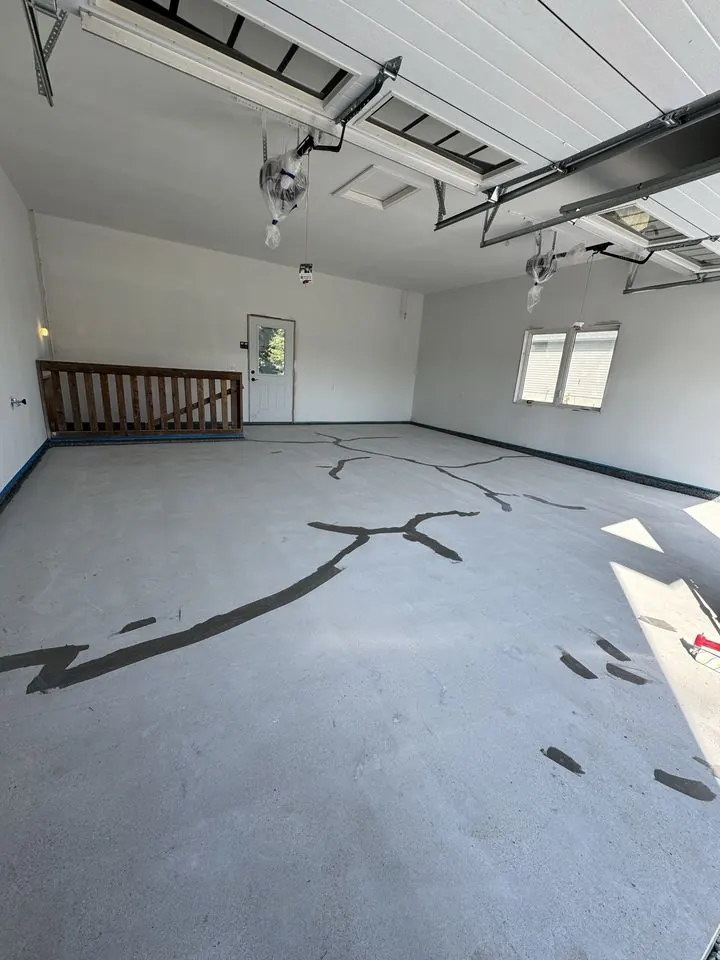
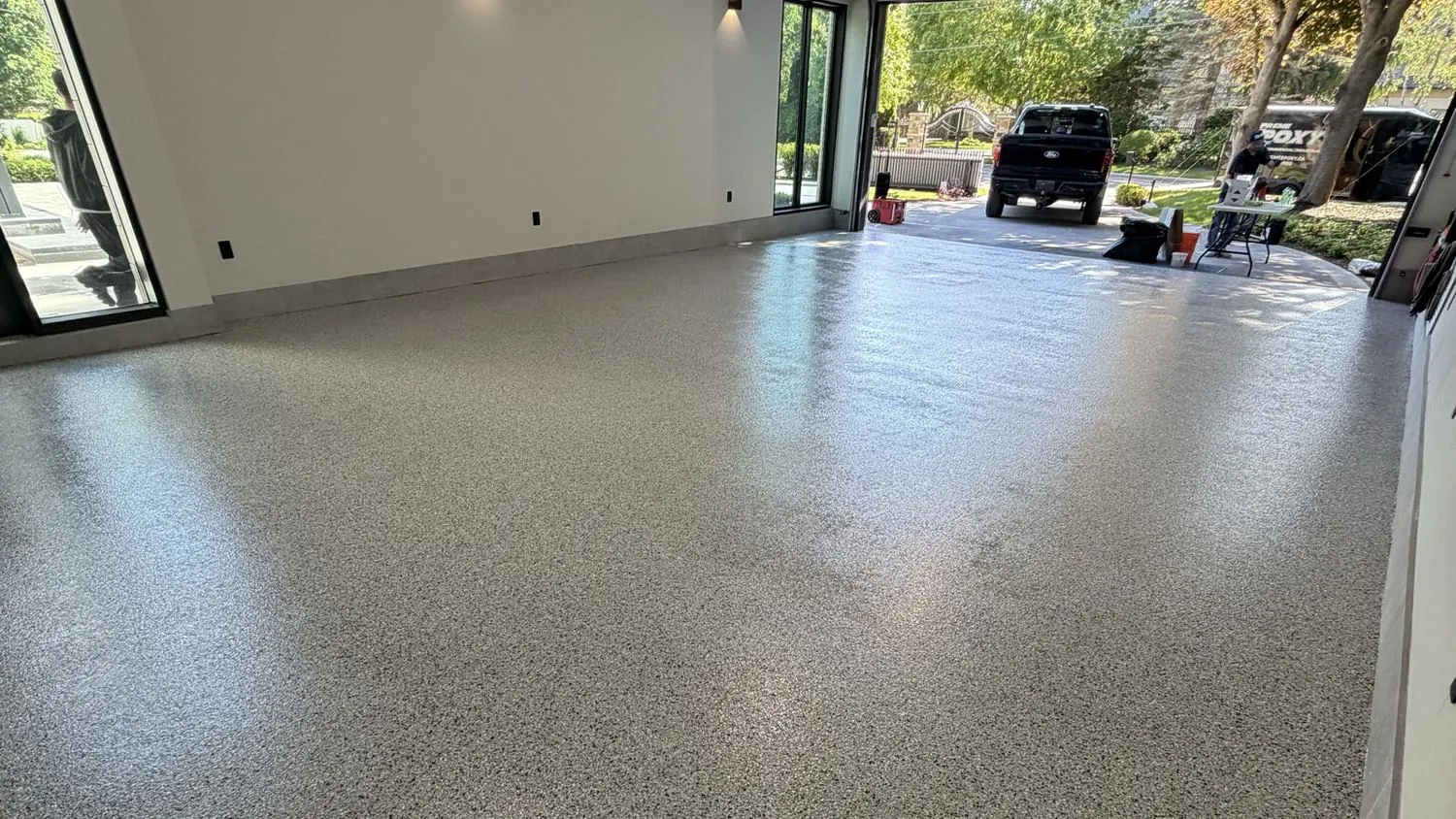
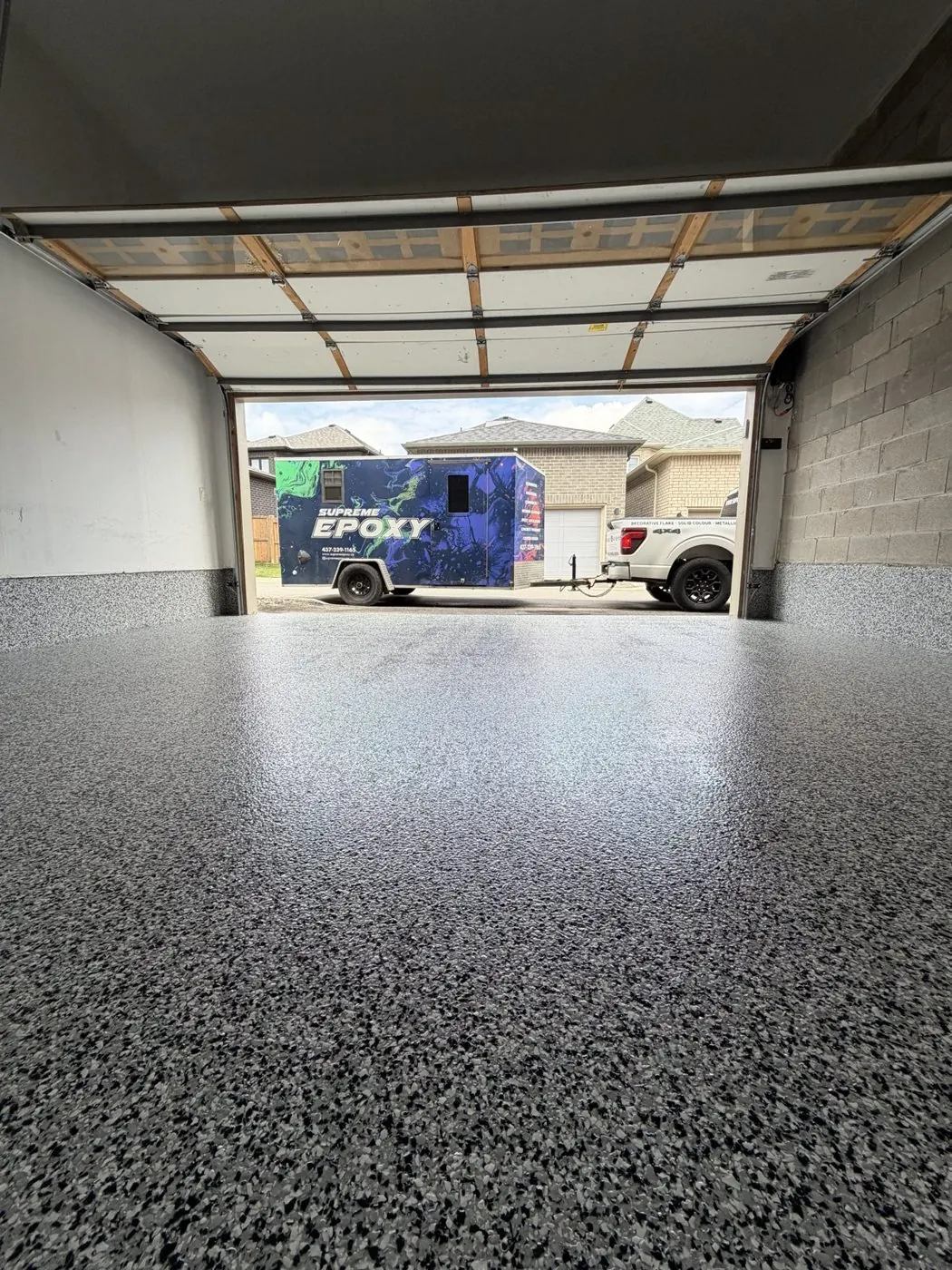
For a garage that gets regular vehicle traffic and direct sunlight near the door, Supreme Epoxy typically recommends a full-broadcast flake system finished with a polyaspartic topcoat. We diamond-grind the concrete, complete the agreed repairs, apply the base coat and broadcast the flake across the floor. We then scrape and vacuum the loose flake before applying the clear finish.
What Epoxy Does Well
Epoxy is a strong, rigid coating with excellent adhesion to properly prepared concrete, which makes it well suited to the base of a floor system. Certain epoxy products are also formulated as moisture vapour barriers, which control moisture rising through the slab so the coating above stays bonded. As an exposed finish, conventional epoxy can amber where it gets regular sunlight.
What Polyaspartic Does Well
Polyaspartic is UV stable, so it does not yellow near an open garage door. It cures quickly, which allows most garage floors to be completed in one working day, and it resists road salt, de-icers, automotive fluids and hot tires. That is why we use it as the exposed finish.
Comparing Garage Floor Quotes
When comparing quotes, ask what is included in the concrete preparation, which products go into each coat, and when you can park again. Two quotes described as epoxy garage flooring can include very different scopes of work.
Our standard garage system. Our 3-coat flake polyaspartic system includes a 5-year warranty against cracking and peeling. Where a slab has moisture issues, we add an epoxy moisture vapour barrier base coat, making a 4-coat system with a 10-year warranty. Learn more about polyaspartic coatings.