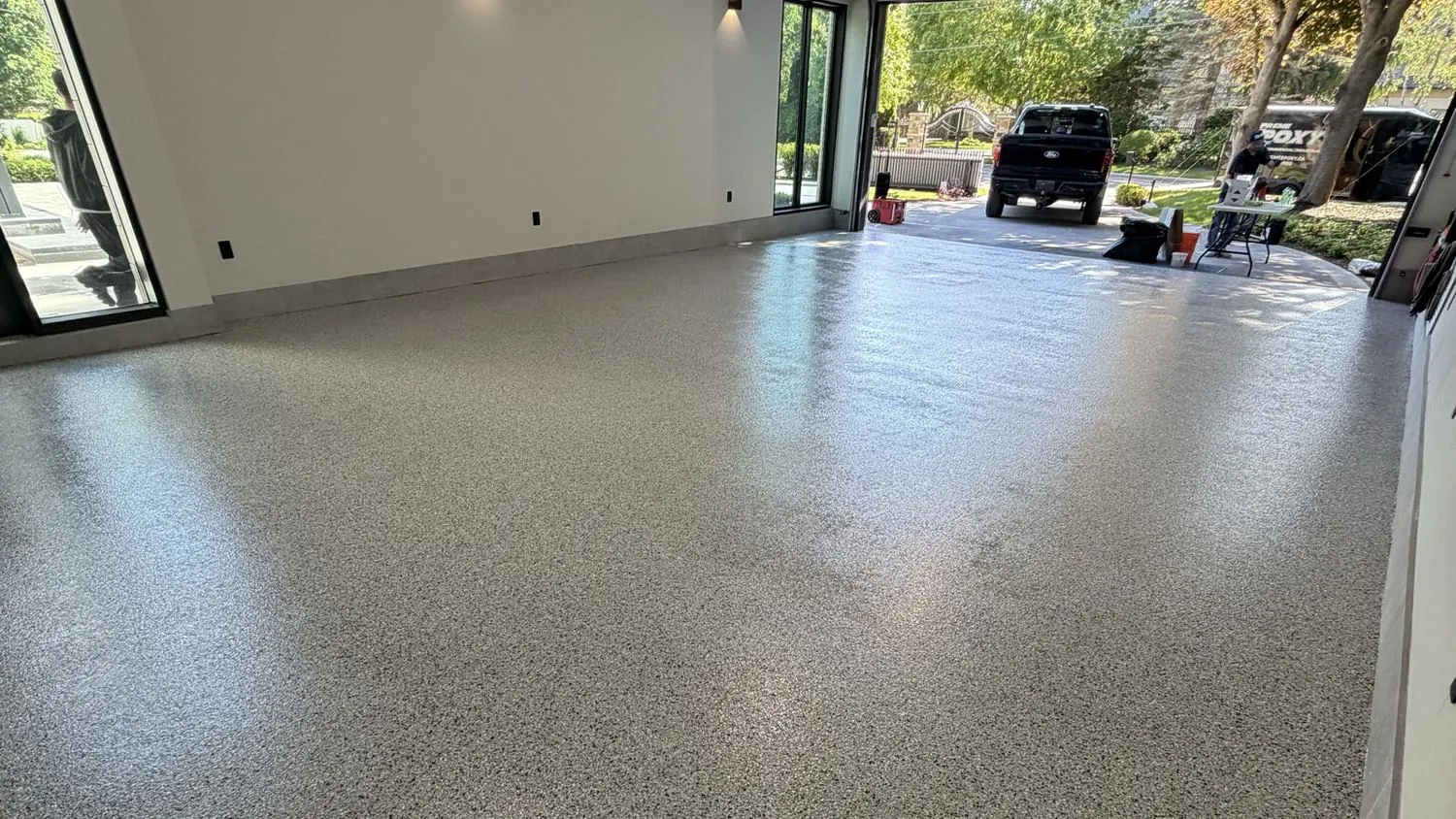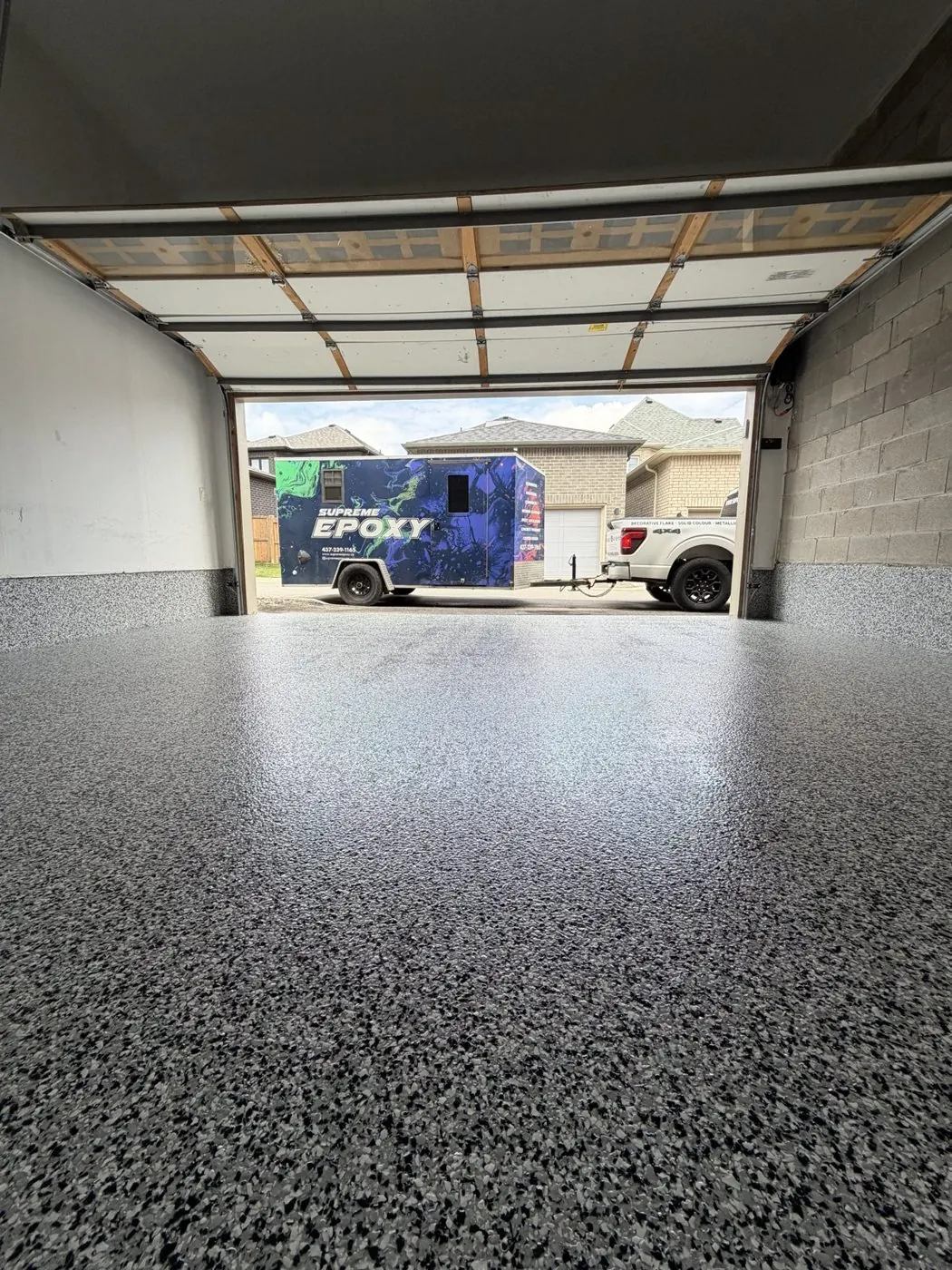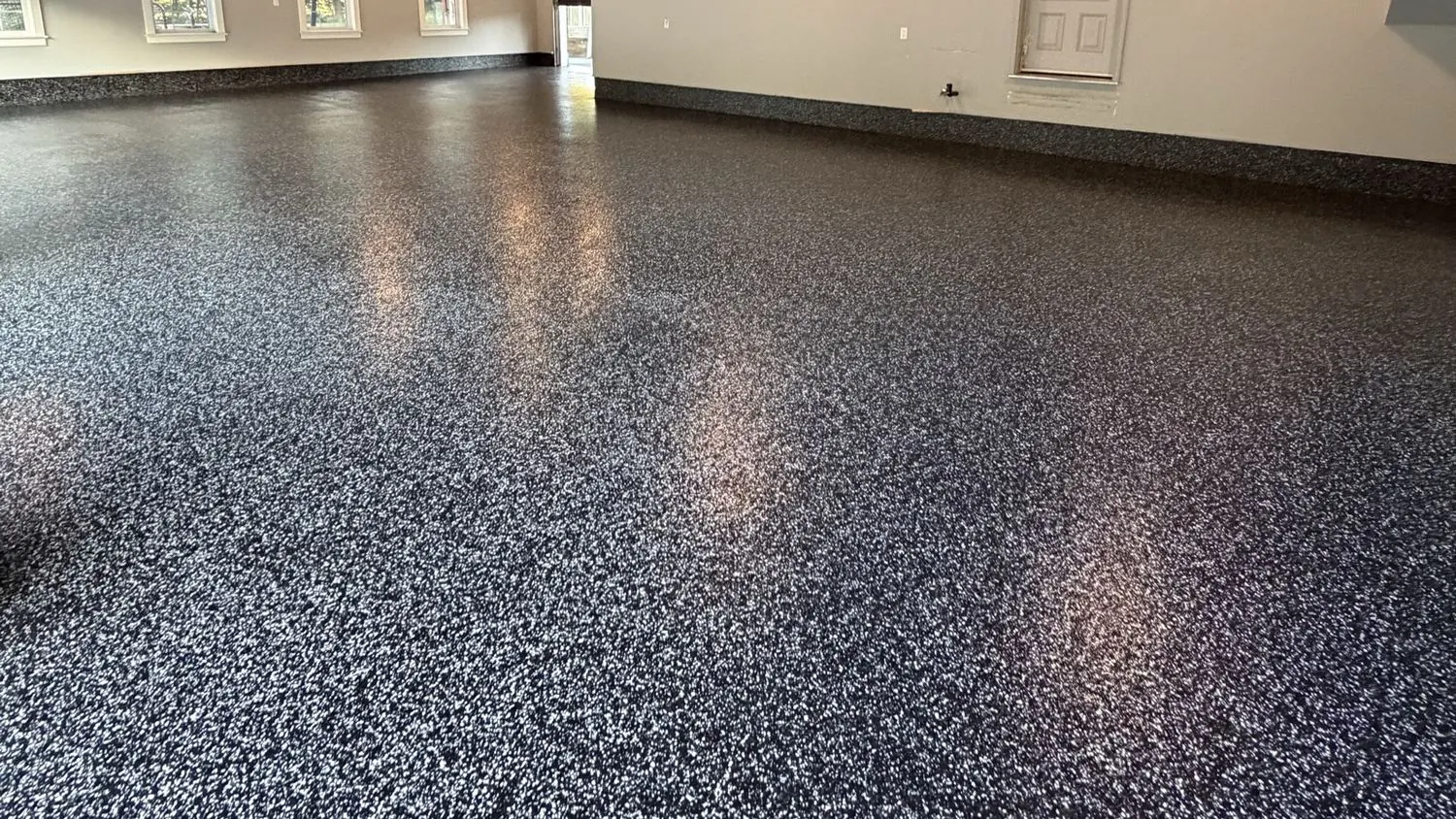
Epoxy can work well in a garage, especially as a base coat. The drawbacks homeowners notice usually come down to the condition of the concrete, the exposed finish and how the floor is used. Request a free estimate to discuss your garage.
Common Drawbacks and How We Address Them
| Common drawback | How Supreme Epoxy addresses it |
|---|---|
| Peeling under tires. Weak concrete, contamination and poor surface preparation can compromise adhesion where vehicles repeatedly park. | We diamond-grind the slab to create a bonding profile, vacuum the surface and repair damaged areas included in the scope before coating. |
| Yellowing near the garage door. Conventional epoxy can amber where it gets regular sunlight. | We use a UV-stable polyaspartic as the exposed finish on our flake system. The full flake broadcast also covers the underlying base coat. |
| Slipperiness when wet. Meltwater can make a coated floor slippery, especially where vehicles track in snow. | Our flake finish adds surface texture. If your garage regularly gets wet, we can discuss added texture and the trade-off with ease of cleaning. |
| Moisture-related blistering or separation. Moisture vapour moving through the slab can affect a coating’s bond. | We assess the slab and can specify a moisture vapour barrier where conditions call for one. |
| Cracks can return. Concrete can keep moving after a surface crack has been repaired. | We repair suitable cracks and pits before coating. We assess moving joints and signs of structural movement separately so the scope reflects what the slab needs. |
| Downtime after installation. A floor can look dry before it is ready for vehicle traffic. | We give you separate return-to-use times. Allow 24 hours before walking and 72 hours before driving or parking on the floor. |
Is a Coated Garage Floor Still Worth It?
For most homeowners, yes. A properly installed system protects the concrete from road salt and oil, stops the slab from shedding dust, is easy to clean and makes the garage a more usable space. The key is an installer who grinds the concrete, assesses moisture and uses a UV-stable finish. Read more about our garage floor system and garage floor pricing.