Every commercial floor eventually looks tired. The gloss is gone in the traffic lanes, there are scuffs and stains, maybe a few chips at joints or doors. The question facility managers face is what to do about it. Patch the bad spots, put a new topcoat on, or tear it all out and start again? Pick the wrong answer and you either spend too much or waste money on a repair that does not hold. Request a free estimate to discuss your project.
This guide gives you a practical way to decide. It starts with understanding what kind of wear you have, then lays out the options and the checks that tell you which is realistic. It builds on our articles on why epoxy floors fail and how long an epoxy floor lasts. For the service, see our epoxy floor repair page.
Step 1: Work Out What Kind of Wear You Have
Surface wear and bond failure look similar to the untrained eye and need completely different responses. Start by sorting what you see into three groups.
- Surface wear: dull patches, scratches, scuffs and thinning topcoat in traffic lanes. The coating is still firmly bonded and the slab is sound.
- Local damage: chips, gouges, cracks or spalled joints in specific places, often from impact or movement. The rest of the floor is intact.
- Bond or moisture failure: peeling, lifting edges, blisters, hollow-sounding areas or damp patches. The coating has lost its grip on the slab.
Each group points toward a different decision, which is why diagnosis comes before price.
Step 2: Test Before You Decide
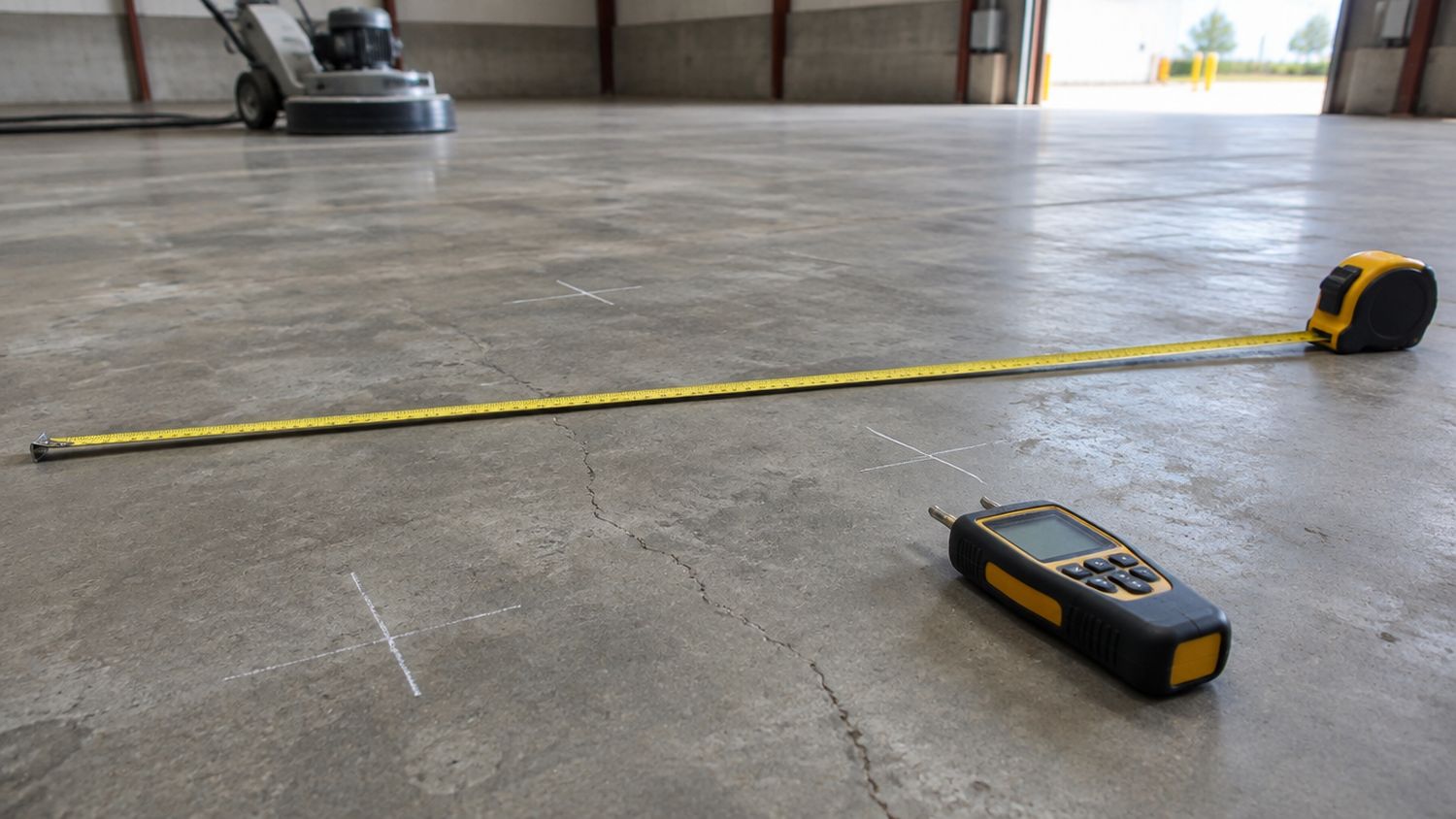
A professional inspection uses a few simple checks to establish the actual condition of the floor.
- Visual survey: mapping where wear, cracks and lifting occur, and how widespread they are
- Tap test: tapping the surface to listen for hollow areas that suggest a lost bond
- Scratch or cut test: checking how easily the coating can be lifted from the slab
- Adhesion test: a pull-off test, where a small disc is bonded to the floor and pulled to measure bond strength, for a more rigorous reading
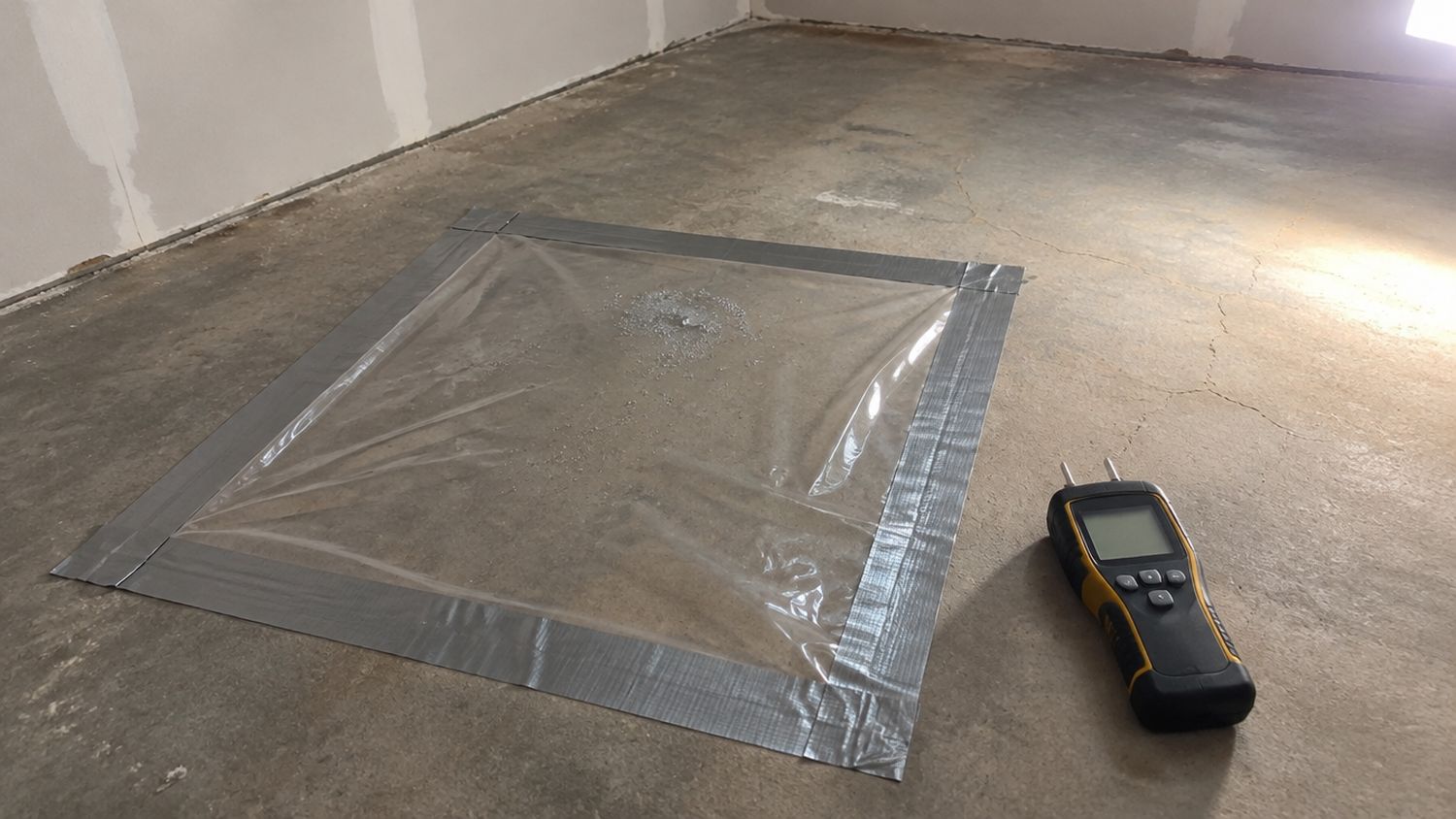
- Moisture test: checking whether vapour is moving through the slab, as we explain in our article on concrete moisture testing before epoxy
- Test patch: trying the proposed repair or overlay on a small, masked-off area before committing the whole floor
Do not recoat on assumption. A new coating over a failing one fails with it. A few hours of testing can save a whole project from being redone.
The Four Options
Option 1: Clean and Refresh the Topcoat
For floors with surface wear but a sound bond, a refresh is often the most economical answer. The floor is thoroughly cleaned and degreased, abraded lightly to give a key, and a new clear topcoat is applied, sometimes with fresh aggregate for traction. This restores gloss, protection and slip resistance in a fraction of the time of a full replacement. It works best when done before the base coat is worn through.
Option 2: Spot Repair
When damage is local, such as a spalled joint, a gouge or a cracked area, the damaged zone is cut out or prepared, filled with compatible repair material, and recoated to blend in. Joints can be refilled with suitable fillers, as we explain in our article on warehouse floor joints. Spot repairs are quick and economical if the cause is local, but they do not fix systemic problems like moisture or widespread bond loss.
Option 3: Overlay or Recoat the Whole System
If the existing coating is sound but worn or no longer suits the use, a new system can sometimes be applied over it after preparation. This might be a thicker build, a different colour, a chemically more resistant topcoat or a new marking layout. It requires a compatible, firmly bonded base, careful preparation and often a test patch. It saves removal work and downtime but only works when the old coating is truly sound.
Option 4: Remove and Replace
When the coating has lost its bond, the slab is damp or contaminated, or the existing system is wrong for the use, the right answer is to remove the failed material, repair and prepare the slab, and install a new system. This takes longer and costs more at first, but it addresses the cause and gives the new floor a sound foundation. Our concrete repair team handles slab repair and preparation as part of this option.
A Simple Decision Guide
- Bond is firm, wear is on the surface: clean and refresh the topcoat
- Bond is firm, damage is local: spot repair and blend
- Bond is firm, but the system no longer suits the use: consider an overlay after a test patch
- Bond is lost, moisture is present or contamination is deep: remove, repair the slab and replace
- Unsure: test first, and ask for a written assessment
Thinking About Cost and Downtime Over the Whole Life
The cheapest option on the day is not always the cheapest over time. A refresh that is done in time can extend a floor’s life substantially. A refresh done after the base coat has worn through is a larger repair. Spot repairs that address a joint problem can prevent far more costly damage. A replacement when the bond has failed avoids a cycle of repeated repairs. Count the downtime too: refreshes and spot repairs are usually fast and can be done in off-hours, while removal and replacement takes longer and needs more planning. Our epoxy flooring quote checklist shows how to compare proposals fairly.
What Drives the Decision in Different Settings
- Retail and offices: appearance and downtime usually matter most, so refreshes and phased work are common
- Kitchens and food areas: hygiene and drains drive decisions, and damaged coves or edges often call for repair or replacement even when most of the floor is sound
- Warehouses and plants: joints, forklift lanes and impact damage dominate, with targeted repairs and marking refreshes between full renewals
- Wet and hot areas: failures often point to the wrong system, so replacement with a more suitable chemistry may be the right answer
- Safety-critical areas: where slip resistance or markings have faded, refresh promptly to restore performance
Protecting a Refreshed or Repaired Floor
- Fix the cause of the damage where possible, such as a leak, wheels or a drainage problem
- Use entrance mats and clean wheels to reduce grit
- Follow a regular cleaning routine, as set out in our article on maintaining commercial and industrial epoxy floors
- Inspect joints, coves and drain edges regularly
- Plan the next refresh into your maintenance calendar
Questions to Ask a Contractor
- How do you test the existing coating and slab before recommending anything?
- What evidence supports refreshing rather than replacing, or the other way round?
- Can you show a test patch before the whole area is done?
- What preparation will be done, and how will edges and repairs blend in?
- How long will the area be out of service, and can work happen out of hours?
- What will you do about the cause of the damage?
Common Mistakes When Deciding
- Judging by looks alone. A dull floor with a solid bond may need only a topcoat, while a glossy floor with a failing bond needs more.
- Recoating without testing. A coating over a poor bond or damp slab will fail again, often faster than the first time.
- Patching without addressing the cause. Repairing a joint without fixing the movement or the wheels that damage it just resets the clock.
- Waiting too long. Letting a topcoat wear through to the base coat turns a simple refresh into a larger job.
- Ignoring how the floor is used now. If the use has changed since installation, the existing system may no longer be the right one.
Keeping Records to Support Future Decisions
Good records make every future decision easier. Keep the original scope and product data sheets, photographs from each inspection, notes on repairs and refreshes, and cleaning and maintenance logs. They show how the floor has aged, help contractors recommend the right approach and support insurance or audit needs. A simple folder or shared drive, updated after each inspection, is enough.
Why you can rely on this guidance. Supreme Epoxy is a commercial, industrial and residential flooring contractor established in 2019, WSIB and business insured, with a 4.9 out of 5 rating from 117 Google reviews. We install the floors we write about, including warehouses completed in as little as three days and overnight installs for operations that cannot stop. This article is general information, not engineering or legal advice. We inspect and test floors before recommending a repair, a refresh or a replacement, and we put the reasons in writing. Every site is different, so confirm requirements for your own space.
Ask for a Floor Assessment
If your floor looks tired and you are not sure what to do, start with an assessment. Book a free site visit and we will inspect the floor, test the bond and slab, explain what we find and give you a written recommendation with the options and their trade-offs.