Anyone who has collected three epoxy flooring quotes for the same room knows the problem. One is a single page with a price and a colour. One runs to five pages with product names, preparation steps and exclusions. One is much cheaper than the rest, and nobody can say exactly why. Comparing the totals is almost useless unless you know what is behind them. Request a free estimate to discuss your project.
This checklist is written for facility managers, property managers, business owners and anyone responsible for a flooring project. It shows what a complete quote should contain, the questions that reveal the quality of the work, and how to compare quotes fairly. Our epoxy flooring cost guide covers the factors that drive price, and this article shows how to check them on paper.
Why Totals Mislead
A floor is the sum of preparation, materials, labour and workmanship, and each can be done at very different levels. Two contractors can quote the same room and differ by a large margin because one grinds the slab, repairs cracks, tests for moisture and applies several coats, while the other lightly etches and rolls on a thin coating. Both are called epoxy floors. Only one is likely to last.
A fair comparison starts with a shared scope. If the quotes do not describe the work in the same way, ask each contractor to add the missing detail before you compare prices.
1. Scope of Work and Area
- The exact areas to be coated, ideally with a plan or measurements
- The condition of the slab as the contractor sees it, including cracks, previous coatings and stains
- Any areas excluded, such as under fixed equipment or inside storage rooms
- How walls, columns, drains and thresholds will be treated, including cove bases where relevant
A site visit should come before a quote. A price based only on a phone call or a floor plan cannot account for what is actually on the slab.
2. Surface Preparation
Preparation decides the life of the floor, and it is also where quotes cut corners most often. Look for specifics.
- Method: diamond grinding or shot blasting to open the surface, rather than a light etch or sanding
- Removal of old coatings: how existing paint, sealers or coatings will be removed
- Contamination: how oil and grease will be dealt with
- Dust control: how dust will be contained, especially in occupied buildings
- Equipment: grinders and vacuums appropriate to the area
We explain why this matters in our article on why epoxy floors fail.
3. Repairs and Joints
- How cracks, pits, spalls and delaminated areas will be repaired, and with what materials
- How saw-cut and construction joints will be treated, for example with a flexible joint filler
- Whether repairs are included in the price or charged separately if found later
- Any allowance for hidden problems discovered during preparation
Repairs are a frequent source of surprise charges. A good quote says clearly what is included and how unknowns will be handled. Our concrete repair page explains typical repair work.
4. Moisture Testing
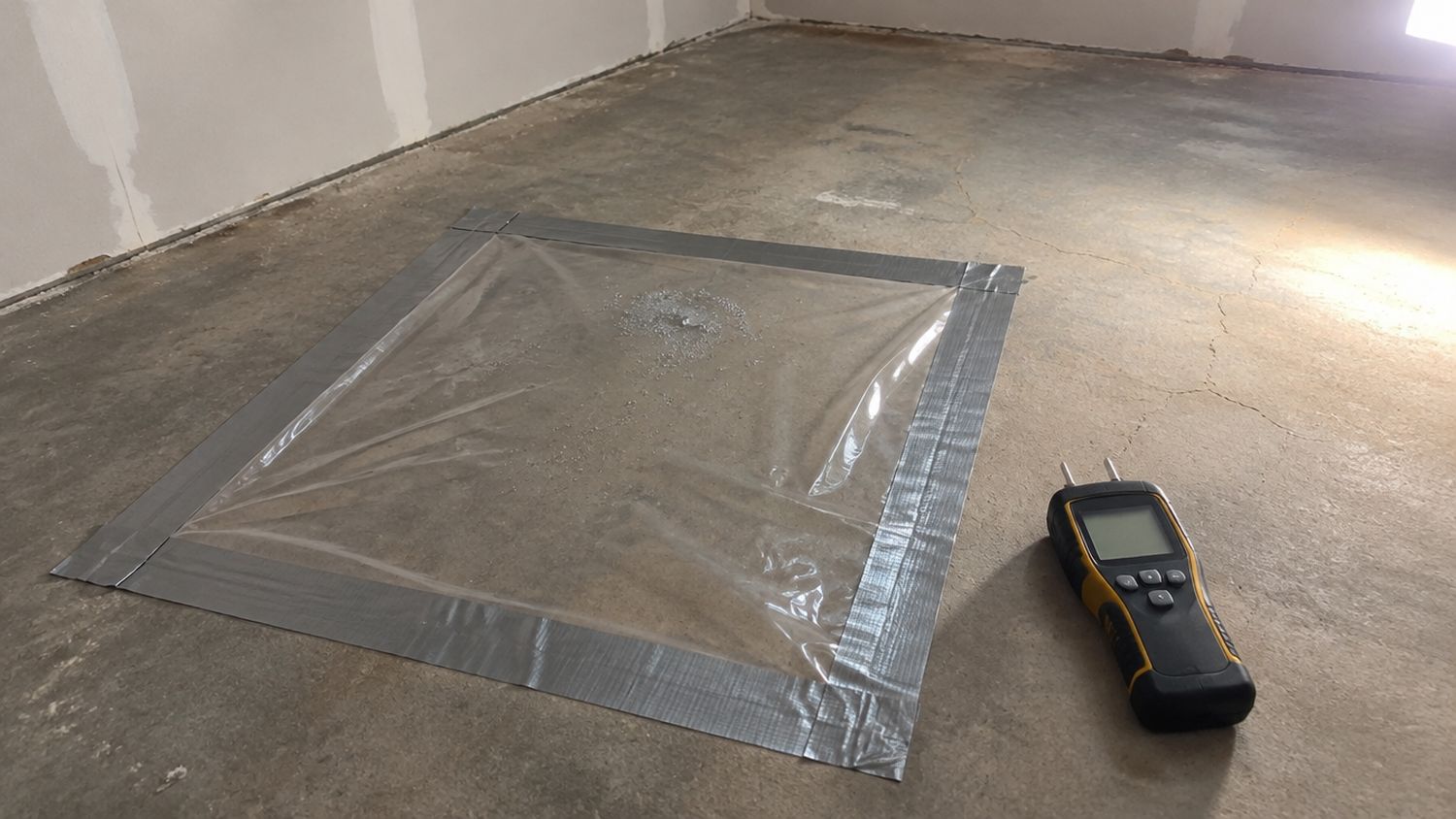
Ask whether the slab will be tested for moisture, which method will be used and what happens if readings are high. A quote that says nothing about moisture is a warning sign, because moisture is a leading cause of coating failure. See our guide to concrete moisture testing before epoxy for what good testing looks like.
5. the System, Layer by Layer
A floor is a system, and a quote should describe it that way. Look for each layer, its purpose and the product.
- Primer or moisture-mitigating layer: when needed, and which product
- Base or build coats: number of coats, thickness or coverage and material type
- Decorative layer: flake, quartz or metallic pigments, with colour and coverage
- Topcoat: chemistry, gloss level and any UV or chemical resistance features
- Texture and slip resistance: the aggregate or finish proposed for each area
- Markings or colours: any lines, zones or logos
Product names matter. They allow you to look up technical data sheets and to compare quotes honestly. If a contractor will not name the products, ask why.
A simple test of quality. If a quote can be summarized as one price, one colour and the word epoxy, it probably lacks the detail that makes a floor last. A good quote reads like a plan.
6. Schedule, Access and Downtime
- Start date, duration and how the work will be phased
- Working hours, including nights and weekends if required
- Cure times and when each type of traffic can return
- What the contractor needs from you: access, power, clear space, parking
- How the work will be protected and how dust and odour will be managed
Downtime is a cost too. A quote that fits your operation can be worth more than a lower price that disrupts it. See our guide to overnight and weekend installs.
7. Exclusions and Assumptions
Every quote has them. The important thing is to see them. Common exclusions include removal of fixtures, moving stock, work under equipment, electrical or plumbing work, hidden slab defects and delays caused by site conditions. Assumptions might include access to water, power and parking or a slab that tests within limits. Read these carefully. They often explain price differences.
8. Warranty and Responsibilities
A warranty is only as useful as its terms. Ask the following and get the answers in writing:
- What does the warranty cover, for example peeling, delamination or defects in workmanship?
- How long does it last, and does it apply equally to every area?
- What conditions apply, such as moisture limits, cleaning methods and traffic?
- What is excluded, for example impact damage, chemical spills, cracks that move or wear of the topcoat?
- Who do you call, and how fast is a response?
- Is the warranty from the installer, the manufacturer or both?
Warranty terms vary between contractors, between systems and between areas of a building. Do not assume they are the same across quotes. Compare the actual wording and exclusions, rather than the headline number of years.
9. Credentials and References
- Business insurance and WSIB coverage in good standing
- Experience with similar floors, ideally with photos of completed work
- References from clients with similar conditions
- Who will supervise and who will do the work on site
- How safety, cleanup and communication are handled on a typical job
How to Compare Quotes Fairly
Once you have two or three detailed quotes, put them side by side and walk through the sections above. Mark where each is specific, where it is vague and where it is silent. Ask each contractor to fill the gaps. Then compare totals on a like-for-like basis, using the same preparation, system and schedule. Often the price differences shrink, or the reasons for them become obvious.
If a contractor is much cheaper, ask where the difference comes from. If the answer is a thinner system, lighter preparation or no testing, you now know what you would be saving. If the answer is efficient crews and good planning, that is a different story.
Red Flags to Watch For
- A quote delivered without seeing the site
- No mention of preparation method, repairs or moisture testing
- A price per square foot with no description of the system
- Pressure to sign quickly or a very low price that is only valid today
- Reluctance to name products or provide a technical data sheet
- A warranty described only as lifetime, with no written terms
A Simple Scoring Method
If you want to be systematic, score each quote from zero to two on the nine sections above: zero for missing, one for vague and two for specific. A quote that scores well across preparation, repairs, moisture testing and system detail is usually the one that has thought hardest about your floor. Tally the scores before you look at price, then bring price in. It keeps the decision grounded in what is actually being delivered.
You can also ask each contractor the same three questions in writing: what is the single biggest risk to this floor, how will you manage it, and what happens if it appears after handover? The quality of the answers is often more telling than any line in the quote.
Why you can rely on this guidance. Supreme Epoxy is a commercial, industrial and residential flooring contractor established in 2019, WSIB and business insured, with a 4.9 out of 5 rating from 117 Google reviews. We install the floors we write about, including warehouses completed in as little as three days and overnight installs for operations that cannot stop. This article is general information, not engineering or legal advice. We give written quotes that describe the preparation, the system, the schedule and the exclusions, so they can be compared properly. Every site is different, so confirm requirements for your own space.
Ask for a Written Quote
The easiest way to get a quote you can trust is to start with a site visit. Book a free visit and we will measure the space, test the slab, explain the options and give you a written quote that lays out every step. You can then compare it with any other quote, line by line.