Ask ten facility managers how long an epoxy floor lasts and you will hear ten different answers, usually based on the one floor they remember best, good or bad. The honest answer is that lifespan is not a property of the epoxy. It is the result of how the slab was prepared, what the floor is asked to do every day, and how it is looked after. Understanding those factors is the fastest way to set realistic expectations and to protect your investment. Request a free estimate to discuss your project.
This guide walks through what decides how long a floor performs, the warning signs that it is wearing out, and what renewal looks like when the time comes. If you are comparing quotes, our epoxy flooring cost guide covers the questions to ask before you sign.
Why There Is No Single Lifespan Number
Epoxy flooring covers a wide range of systems, from a thin single-coat sealer in a storage room to a thick, broadcast and sealed system in a busy kitchen or a plant. Each is designed for a different level of abuse. A floor in a quiet office corridor and a floor under forklifts with hard wheels are not in the same category, even if both are described as epoxy.
Any contractor who quotes you one fixed lifespan for every space is simplifying. A better question is: what will this system be asked to do, and what did the installer do to make sure it can handle that? The answer shows up in six areas.
1. Surface Preparation Comes First
Coatings do not stick to dust, laitance, sealers or oil. They grip a clean, open surface. That is why proper installations start with mechanical preparation, usually diamond grinding, which removes the weak top layer of concrete and gives the coating a profile to bond to. Acid etching and light sanding are common shortcuts, and they are the most frequent root cause of early peeling.
Preparation also means repairing the slab. Cracks, pits, spalls and joints are filled before coating, otherwise they telegraph through and fail first. You can read more about how we handle this on our concrete repair page.
2. Moisture in the Slab
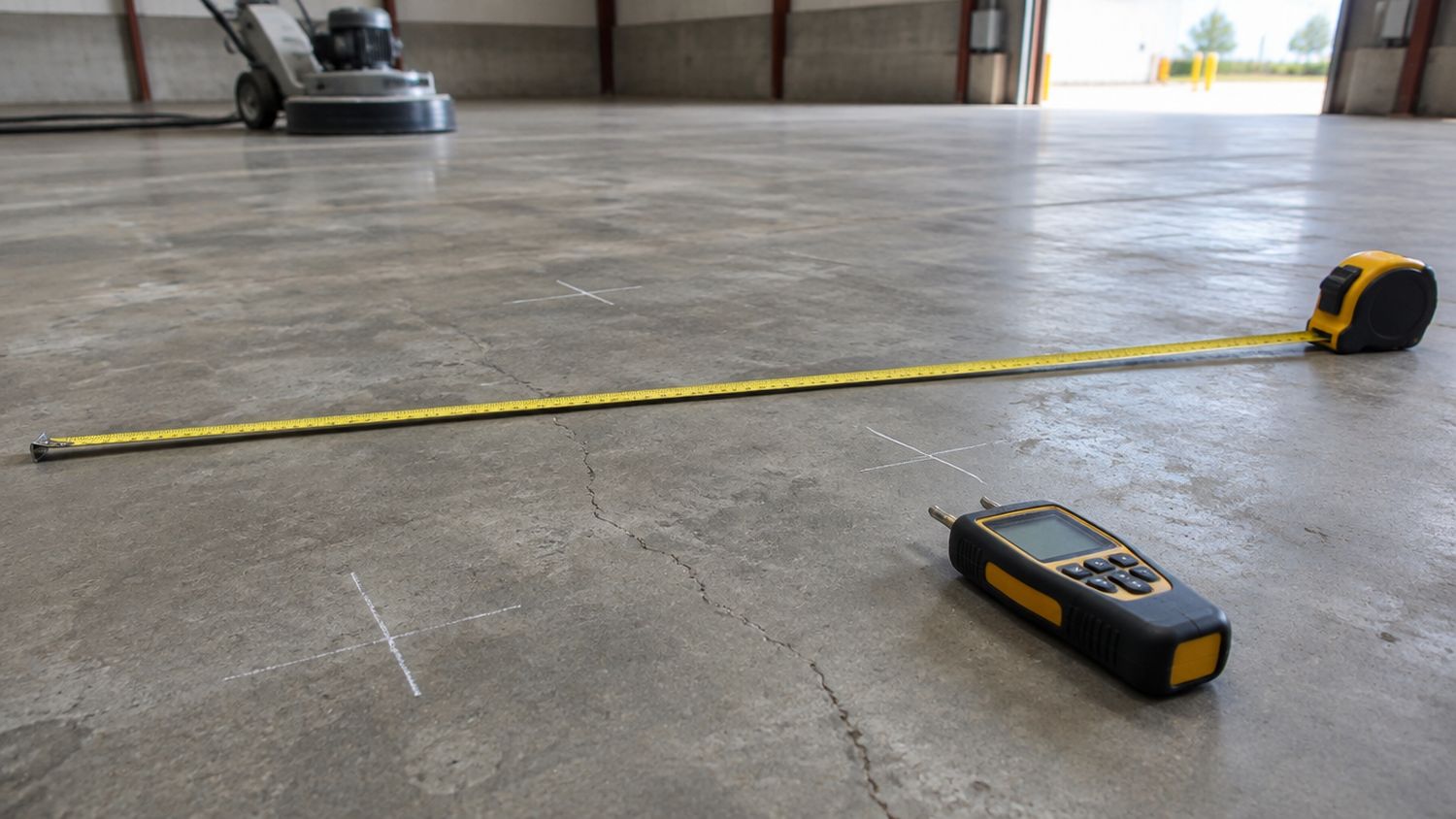
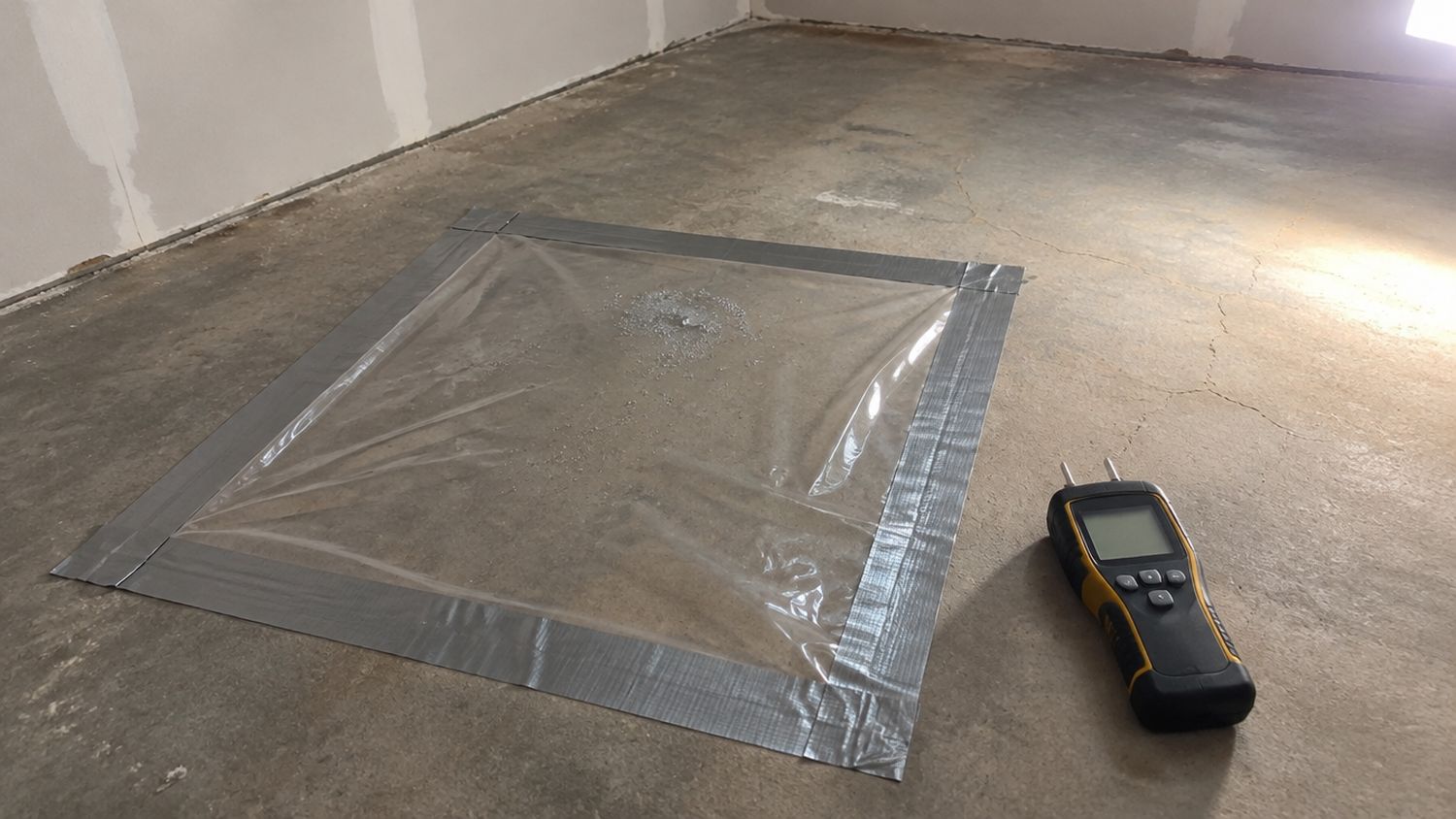
Concrete is porous and it holds water. If moisture vapour is moving up through the slab, it builds pressure under the coating and breaks the bond, which shows up as blisters, bubbles and eventual delamination. This is common in basements, slabs on grade and buildings with poor drainage. A moisture test before coating tells you whether the slab is ready, needs a moisture-mitigating primer, or should be left alone for now. Skipping the test is a gamble with the whole floor.
3. the Coating System and Its Thickness
A floor is a system, not a can of paint. A typical system includes a primer, one or more build coats, optional broadcast of flake or quartz for texture, and a clear topcoat. Each layer has a job. Thicker systems resist impact and abrasion better, while thinner ones suit light traffic and are easier to renew.
- Light duty: offices, storage rooms and retail back areas, where traffic is mostly foot traffic
- Medium duty: garages, showrooms, service bays and busy commercial spaces
- Heavy duty: warehouses, plants and loading areas with hard-wheeled traffic, dropped tools and pallets
Matching the system to the duty level is where an experienced contractor earns their fee. For heavy industrial use, a different chemistry such as urethane cement may suit better, which we compare in our guide to epoxy, polyaspartic, polyurea and urethane cement.
4. Traffic, Impact and Chemicals
What touches the floor matters as much as how it was installed. Forklifts with hard polyurethane wheels, pallet jacks that turn on the spot, dragged equipment and dropped steel all concentrate load on a small area. Chemicals matter too. Battery acid, strong solvents, hydraulic fluid, caustic cleaners and certain food acids can soften or etch some coatings if they sit.
If your operation involves any of these, tell your installer before the system is chosen. A coating selected for chemical resistance and a floor with a tough topcoat can cope with spills that would damage a standard system. See our industrial epoxy flooring page for the systems we use in demanding areas.
5. Sunlight and Temperature
Standard epoxy resins can turn amber when they are exposed to UV light, which is why floors beside overhead doors or large windows are often finished with a UV-stable topcoat. Temperature swings also stress coatings. Freezers, cold stores and floors near heat sources move more than a floor in a steady office climate, and a flexible, purpose-chosen system handles that better.
6. Cleaning and Maintenance Habits
Dirt and grit are abrasive. Floors that are swept, dry-mopped and cleaned with the right pH-neutral products keep their finish longer than floors that are neglected or scrubbed with harsh chemicals. Rubber tire marks, spills and standing water should be dealt with promptly. A simple, regular routine is the cheapest way to extend lifespan.
Rule of thumb from the field. When a floor fails early, the cause is rarely the epoxy itself. It is nearly always preparation, moisture or a system that did not match the job. If those three were right, the floor usually has years of service ahead of it.
Signs a Floor Is Wearing Out
Floors rarely fail overnight. They give warning signs that you can catch and act on early:
- Dull or hazy patches in the busiest lanes where the topcoat is wearing thin
- Visible scratches and scuffs that no longer buff out with cleaning
- Chips at joints, edges and thresholds, where impact is highest
- Small blisters or soft spots, which can point to moisture
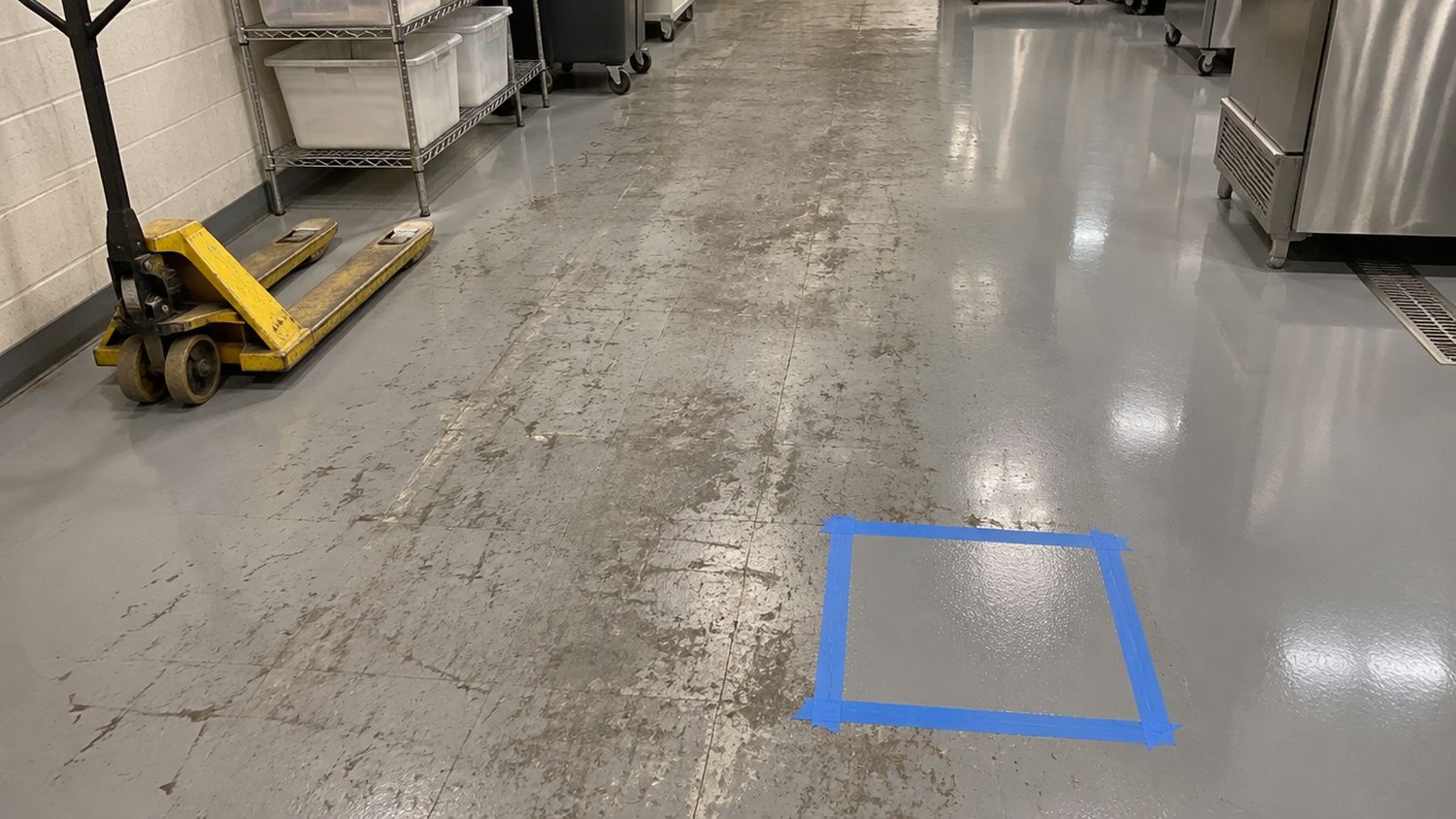
- Edges lifting or peeling, which means the bond has been broken
- Staining that sinks in rather than wiping away
Surface wear in a topcoat is a maintenance issue. Peeling and bubbling are a bond or moisture issue. Telling them apart is the first step to the right fix, and our epoxy floor repair team can assess which one you have.
Renewing a Floor Instead of Replacing It
One of the strengths of a good epoxy system is that it can often be renewed. If the coating is still bonded to the slab, the surface is cleaned, abraded to give a key, damaged areas are patched, and a fresh topcoat is applied. This restores the finish and the protection at a fraction of the disruption of a full strip and recoat.
If the coating has lost its bond or the slab is wet, the failed material needs to come off first. Putting a new coat over a failing one just hides the problem for a short time. A professional assessment will tell you which path makes sense for your floor, before you commit to either.
How to Get the Most from a New Floor
- Ask how the slab will be prepared and insist on diamond grinding, not just a light etch
- Ask whether the concrete will be tested for moisture and what the plan is if it is high
- Describe your traffic, chemicals and temperature honestly, so the system can be matched to them
- Choose a UV-stable topcoat if the floor will see direct sun
- Set up a simple cleaning routine on day one and keep felt or rubber protection under heavy furniture and equipment
- Plan for periodic topcoat renewal in high-traffic lanes, rather than waiting for the base coat to wear through
What Wear Looks Like in Different Spaces
The same coating ages differently depending on where it is installed. Knowing the typical pattern helps you plan renewal before a floor is past saving.
- Warehouses and plants: wear concentrates in forklift lanes, turning points and loading areas, where hard wheels grind at the topcoat. Edges of saw-cut joints can chip if they are not protected, which is why joint filling is part of a long-lived floor.
- Commercial kitchens and food areas: constant washing, hot water and cleaners dull the surface and can soften weaker systems. Floors near dish pits and cooking lines age fastest.
- Retail and showrooms: the main enemy is grit carried in on shoes. It scratches the topcoat in entrances and main aisles and slowly dulls the gloss.
- Garages and service bays: hot tires, road salt and dropped tools are the main stresses, and the area at the door takes the most punishment.
- Offices and corridors: light traffic means slow wear, with most visible aging coming from furniture moving and chair casters.
Seeing where your floor is wearing first tells you where to focus protection, for example walk-off mats at entrances, wheel upgrades on carts or a tougher topcoat in the busiest lanes.
Questions to Ask a Contractor About Lifespan
When a contractor quotes a system, a few direct questions show how seriously they take durability:
- What will you do to prepare the slab, and what equipment will you use?
- Will you test the concrete for moisture, and what happens if the readings are high?
- Which system are you recommending for my traffic and chemicals, and why?
- What topcoat protects the floor, and how is it renewed when it wears?
- What cleaning routine and products do you recommend, and which should I avoid?
Clear, specific answers are a good sign. Vague answers or a single price for every floor are not.
Why you can rely on this guidance. Supreme Epoxy is a commercial, industrial and residential flooring contractor established in 2019, WSIB and business insured, with a 4.9 out of 5 rating from 117 Google reviews. We install the floors we write about, including warehouses completed in as little as three days and overnight installs for operations that cannot stop. This article is general information, not engineering or legal advice. We have also seen floors that were installed by others and failed within months, and nearly every time the cause traced back to one of the six areas above. Every site is different, so confirm requirements for your own space.
Planning Your Own Floor
The best way to find out how a floor will perform in your space is to have someone look at the slab, ask about your operation and explain the system they recommend and why. We do that at every free site visit, across commercial, industrial and residential projects in Toronto and the GTA. You leave with a written quote and a clear picture of how the floor will be prepared, installed and looked after.